

Table of Contents
The verdict: PakSat-1R provided basic broadcast coverage, but the 10 Gbps Ka-band HTS payload on Paksat MM1 transforms Pakistan’s space infrastructure into a high-speed broadband network. This shift enables 160 Mbps consumer connections and compact 0.75m terminals, bridging the digital divide where terrestrial fiber cannot reach.
As of September 2026, Pakistan’s satellite communications have undergone a fundamental shift following the full commercial activation of Paksat MM1 at 38.2° East. The legacy platform, PakSat-1R, reached the end of its 15-year design life this year, forcing a mandatory migration for domestic broadcasters and data providers. This transition is not merely a replacement of aging hardware. The integration of a Ka-band High Throughput Satellite (HTS) payload represents a generational leap in aerospace engineering for the country.
By moving away from traditional wide-beam transponders to a multi-spot beam architecture, the national space agency SUPARCO has effectively replaced a basic broadcasting relay with a dedicated two-way broadband network. This upgrade allows local internet service providers (ISPs) to deliver high-speed connectivity to unserved regions, fundamentally altering how rural data networks operate across the country.
By The Verge PK Space & Telecom Desk. We track Pakistan’s satellite deployments, ground station infrastructure, and local ISP network integrations to explain what global aerospace shifts mean for regional connectivity.
Specifications and Capabilities: The Hardware Head-to-Head
The architectural differences between the two satellites dictate their operational limits. Built by the China Academy of Space Technology (CAST), the new satellite utilizes the advanced DFH-4E bus, a significant upgrade over the older DFH-4 platform that housed PakSat-1R. This heavier, more power-dense chassis accommodates a much larger communications payload, increasing the total transponder count from 30 to 48.
The most critical hardware change is the frequency band allocation. PakSat-1R relied strictly on 12 C-band and 18 Ku-band transponders, according to PakSat-MM1 Satellite Details. While the new platform retains and expands these legacy bands to ensure a smooth migration for existing television networks, it introduces entirely new Ka-band and L-band payloads. The addition of the Ka-band enables the HTS architecture required for consumer internet, while the L-band supports a Satellite-Based Augmentation System (SBAS) for precise regional navigation.
| Specification | PakSat-1R (Legacy) | PakSat MM1 (Current) |
|---|---|---|
| Platform | DFH-4 | DFH-4E |
| Total Transponders | 30 | 48 |
| Frequency Bands | C, Ku | C, Ku, Ka, L |
| Beam Architecture | Regional Wide-Beam | Multi-Spot Beam (Ka) |
| Max System Capacity | Basic Data Relay | 10 Gbps |
Performance and Throughput: The 10 Gbps Leap
The transition to a Ka-band multi-spot beam architecture directly causes the massive increase in available bandwidth. Traditional satellites like PakSat-1R cast a single, wide beam over a massive geographic area, meaning all users within that footprint had to share the same block of frequencies. The HTS payload on Paksat MM1 divides Pakistan into multiple focused spot beams. Because these beams are geographically separated, the satellite can reuse the same frequencies multiple times across different regions without interference.
This frequency reuse strategy drives the total deliverable system capacity up to 10 Gbps, as outlined by PAKSAT HTS Broadband Services. Consequently, the maximum downlink speeds available to individual users have jumped exponentially. Where legacy VSAT connections on the old satellite struggled to maintain a few megabits per second, the HTS payload delivers maximum downlink speeds of up to 160 Mbps and uplink speeds of 20 Mbps per user. This capacity is specifically designed to support heavy data loads, such as transmitting large datasets from remote research facilities without relying on terrestrial fiber.
Features and Terminal Sizes: Shrinking the Ground Station
The physics of radio frequencies dictate the size of the equipment needed on the ground. Because the Ka-band operates at a much higher frequency (shorter wavelength) than legacy C-band signals, the ground antennas required to receive the signal can be significantly smaller. This inverse relationship between frequency and antenna size fundamentally changes the economics of satellite internet installation for end users.
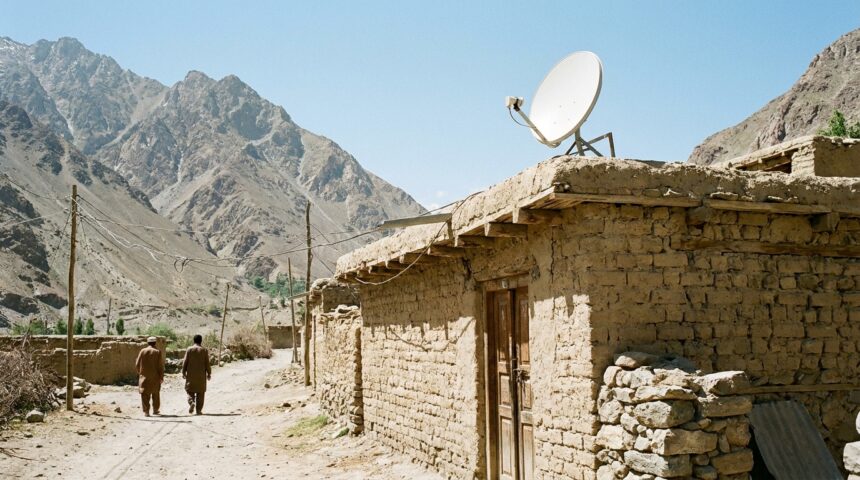
Consumers and small businesses connecting to the new network use compact terminals ranging from 0.75 meters to 1.2 meters in diameter, a stark contrast to the massive 1.8-meter-plus dishes required for reliable C-band reception. According to the Pakistan Space Program 2026 documentation, these new terminals weigh roughly 35 kg and draw only 60 watts of power. This low power requirement makes them ideal for off-grid deployment using basic solar panels, particularly when connecting isolated research reactors and scientific sites in remote terrain.
- 1.8m+ dish size
- High power consumption
- Heavy, fixed installation
- 0.75m to 1.2m dish size
- 60W power requirement
- 35kg portable weight
Price Efficiency and Drawbacks: The Cost of Ka-Band
The spot beam architecture of the HTS payload drastically lowers the cost per megabit of data. By pushing 10 Gbps of total capacity through the same launch and operational costs of a traditional satellite, the wholesale price of bandwidth drops. This efficiency makes satellite broadband commercially viable for local ISPs, who can now package rural internet plans at price points closer to urban fiber connections.
However, operating in the Ka-band introduces a specific physical vulnerability: rain fade. Higher frequency signals are easily absorbed by atmospheric moisture, meaning heavy rainfall during Pakistan’s monsoon season can degrade or temporarily sever the connection. To mitigate this, engineers designed the network with a 0.08° gateway beam and established three primary ground gateway stations in Lahore, Karachi, and Islamabad. If a severe storm hits the Karachi gateway, the system can route the traffic of all 11 user beams through the Lahore or Islamabad infrastructure to maintain national connectivity.
- Massive 10 Gbps total bandwidth
- Lower wholesale cost per Mbps
- Highly portable 0.75m user terminals
- Increased susceptibility to rain fade
- Requires denser ground gateway infrastructure
Who Should Pick Which Network?
With PakSat-1R officially at the end of its life, all traffic has migrated to the new DFH-4E platform. However, customers must still choose which payload band on the new satellite best suits their operational needs. The legacy C-band payload remains active and expanded on the new satellite, offering up to 55 dBW of coverage. Traditional television broadcasters and cellular backhaul operators who require wide regional coverage and absolute immunity to monsoon rain fade should continue leasing C-band transponders.
Conversely, the Ka-band HTS payload is the definitive choice for high-speed data transfer. Rural ISPs, mobile banking nodes, and educational institutions in Balochistan and Gilgit-Baltistan should adopt the Ka-band services. The 160 Mbps downlink speeds and cheap, low-power ground terminals make it the only practical solution for bridging the digital divide in areas where laying fiber-optic cables is geographically impossible.
FAQ
What is the HTS payload on PakSat-MM1?
The HTS (High Throughput Satellite) payload on PakSat-MM1 operates in the Ka-band and utilizes multi-spot beam technology. This architecture allows the satellite to reuse frequencies across different geographic areas, delivering a massive 10 Gbps of total capacity and enabling dedicated broadband speeds up to 160 Mbps for individual users.
Why did Pakistan replace PakSat-1R?
Pakistan replaced PakSat-1R because it reached the end of its 15-year design life in 2026. Launched in 2011, the legacy satellite relied on older C and Ku-band technology, which could not support the high-speed broadband demands of modern internet service providers and the government’s Digital Pakistan initiatives.
How small are the new satellite internet terminals?
The new PakSat-MM1 Ka-band terminals range from 0.75 meters to 1.2 meters in diameter. Because the HTS payload transmits a highly concentrated signal, users no longer need massive VSAT dishes. These compact terminals weigh roughly 35 kg and require only 60 watts of power, making them highly portable.