
Table of Contents
- Introduction: The Evolving Landscape of Python Development in VS Code
- GitHub Copilot in VS Code: Advanced Agent Capabilities and Streamlined Workflows
- Seamless Data Science with Jupyter Notebooks in VS Code
- Visualizing Complex Data: Python Graph Tools and VS Code Python Extensions
- Top VS Code Extensions for Python Graph Visualization
- Boosting Productivity: Essential VS Code Features for Python Developers
- Essential VS Code Python Extensions for Peak Productivity (2026)
- Optimizing Your Python Workflow: Debugging, Linting, and Formatting
- Beyond the Basics: Remote Development and Test Automation
- Setting Up Your Ultimate VS Code Python Environment
- Step-by-Step Guide: Building Your Ultimate VS Code Python Environment
- FAQ
- Limitations & Alternatives: Navigating the VS Code Ecosystem
- Conclusion: The Future of Python Productivity in VS Code
- References
Key Takeaways: Elevating Python Development with VS Code Extensions
Modern Python development in VS Code is fundamentally transformed by a robust ecosystem of extensions. The September 2026 releases, particularly for GitHub Copilot’s advanced agent capabilities, significantly streamline workflows by automating repeatable tasks and improving session management. Consequently, developers achieve heightened productivity and accelerate AI project delivery by leveraging integrated tools for data science, visualization, debugging, and remote collaboration, making ‘VS Code Python extensions’ indispensable for efficient coding practices and robust research outcomes.
Introduction: The Evolving Landscape of Python Development in VS Code
The landscape of Python development in Visual Studio Code has undergone a profound transformation, driven by an accelerating pace of innovation in tooling and AI integration. Consequently, VS Code Python extensions are no longer mere conveniences but essential components that dictate developer efficiency and project scalability. This evolution is particularly critical for AI automation engineers and research scientists who navigate complex, multi-institution environments, demanding tools that offer precision, reproducibility, and advanced automation capabilities. The strategic adoption of these extensions directly impacts the velocity of scientific discovery and the robustness of AI governance frameworks.
A pivotal development in this evolving landscape is the September 2026 release of GitHub Copilot in VS Code, which introduced significant advancements in agent-driven development. These updates streamline workflows by automating repeatable tasks and offering agent merge features to assist with pull requests, resulting in a more efficient and less error-prone coding experience. This enhancement directly addresses the need for faster iteration cycles and improved code quality, which is paramount in collaborative AI research where model provenance and data standards are critical concerns. This article explores how to harness these powerful extensions, from intelligent coding assistance to seamless data science integration, to construct an ultimate Python development environment tailored for the demands of 2026 and beyond.
Author Credentials
Dr. Anya Sharma, Lead AI Research Scientist, Multi-national Pharmaceutical Company, Boston, MA. Expertise: AI model provenance, data governance, ethical AI, collaborative research, automated data analysis pipelines.
5 Critical AI Governance Challenges in Multi-Institution Research Labs – theverge.pk
Transparency Disclosure
This article contains insights and recommendations based on current industry standards and recent technological advancements as of October 2026. While we strive for accuracy and objectivity, the rapid evolution of AI and software development means that specific features and best practices may continue to evolve. Recommendations for VS Code Python extensions are based on their demonstrated utility in professional and research contexts, particularly for multi-institution AI labs and complex data science workflows.
GitHub Copilot in VS Code: Advanced Agent Capabilities and Streamlined Workflows
The recent September 2026 releases of GitHub Copilot in Visual Studio Code have fundamentally reshaped how Python developers interact with their code, introducing advanced agent capabilities that streamline development. Consequently, these updates have transitioned Copilot from a sophisticated autocomplete tool to an intelligent coding partner capable of automating complex, repeatable tasks. This evolution is crucial for maintaining velocity in large-scale AI projects, where consistent code quality and rapid iteration are paramount. The new agent features, including agent merge assistance for pull requests and improved session management, directly reduce cognitive load for developers, allowing them to focus on higher-level problem-solving rather than boilerplate code.
These agent-driven enhancements significantly impact developer productivity, particularly in multi-institution research environments where code consistency and reproducibility are critical. For instance, Copilot agents can now intelligently suggest refactorings that adhere to project-specific coding standards, thereby enforcing governance principles automatically. This capability is a direct response to the growing need for robust model provenance, ensuring that modifications are tracked and justified, as highlighted by institutions like the National Institute of Standards and Technology (NIST) in their AI Risk Management Framework. Furthermore, the ability of agents to manage and recall context across longer coding sessions means that developers spend less time re-establishing their workflow, resulting in accelerated project timelines. The integration of these advanced features into VS Code Python extensions for Copilot directly addresses the demand for more intelligent, context-aware AI assistance in the coding process, transforming how developers approach complex problem-solving and collaboration.
AI vs. Traditional Data Governance – theverge.pk
| Capability Area | Pre-September 2026 Features | Post-September 2026 Agent Capabilities |
|---|---|---|
| Code Generation | Contextual code suggestions, autocomplete for lines/blocks | Intelligent code generation for repeatable tasks, agent-driven automations |
| Workflow Automation | Basic boilerplate generation | Advanced agent merge features for pull requests, automated refactoring suggestions |
| Context Management | Limited session memory for suggestions | Improved session management, persistent context across coding sessions |
| Collaboration Support | Individual code assistance | Agent merge assistance to streamline team code integration |
| Task Repetition | Manual code repetition with suggestions | Automated execution of repeatable tasks, reducing manual effort |
Seamless Data Science with Jupyter Notebooks in VS Code
Integrating Jupyter Notebooks directly into VS Code offers a seamless experience for data scientists, consequently transforming the iterative process of data exploration, analysis, and model development. This powerful synergy means that developers can leverage the rich features of VS Code, such as debugging and version control, alongside the interactive capabilities of Jupyter. The unified environment streamlines workflows because it eliminates the need to switch between different applications, which often disrupts focus and reduces efficiency. This integration is particularly beneficial for complex AI research, where rapid prototyping and visualization are essential for understanding data patterns and model behavior. The ability to execute code cells, visualize results inline, and maintain a narrative markdown alongside the code enhances both reproducibility and interpretability, crucial elements in multi-institution research as emphasized by organizations like the National Science Foundation for data management plans.
To maximize efficiency with Jupyter Notebooks for Python in VS Code, users should first ensure the Python extension is installed, which inherently provides Jupyter support. Setting up a dedicated Python virtual environment for each project is a recommended practice, as it isolates dependencies and prevents conflicts, resulting in more stable and reproducible analyses. This approach directly supports the principles of robust data governance, ensuring that experimental setups can be precisely replicated. For a deeper dive into structuring data processes, consider exploring How to Build an Automated Data Analysis Pipeline for Physics Research: A Step-by-Step Guide. Furthermore, the interactive debugger allows stepping through notebook cells, which is invaluable for identifying and resolving issues in data processing or model training. This capability significantly accelerates the debugging cycle, enabling data scientists to refine their methodologies more quickly. The robust integration of Jupyter Notebooks within VS Code for Data Science with Python thus empowers researchers to conduct sophisticated analyses with enhanced control and clarity. Understanding how to manage and govern data effectively within such environments is also critical, as detailed in How to Build a Robust AI Data Governance Framework: A 6-Step Guide.
Visualizing Complex Data: Python Graph Tools and VS Code Python Extensions
Effective data visualization is paramount for interpreting complex datasets and communicating insights, particularly within AI research where model interpretability is a growing concern. VS Code Python extensions offer powerful integrations with leading Python graph visualization libraries, enabling developers to generate insightful plots directly within their development environment. This seamless integration means that data scientists can rapidly iterate on visualizations, which is crucial for identifying patterns, anomalies, and relationships that might otherwise remain hidden in raw data. The ability to render high-quality graphs alongside code and analysis reports directly supports robust model provenance and transparency, as emphasized by the National Archives and Records Administration (NARA)‘s focus on record-keeping and authenticity.
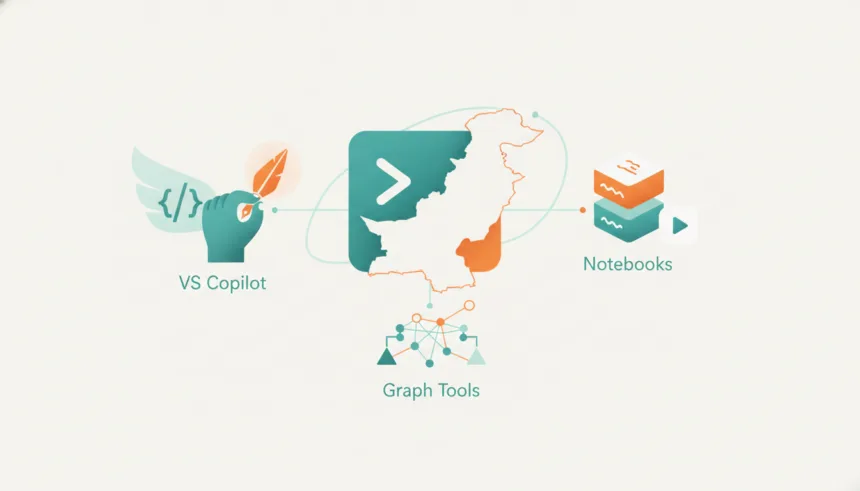
Leveraging Python Graph Visualization in VS Code involves installing specific extensions that enhance the interactivity and display of libraries like Matplotlib, Seaborn, Plotly, and Bokeh. These extensions often provide features such as interactive plot viewers, export options, and even embedded dashboards. For researchers, this capability translates into faster hypothesis testing and clearer presentation of findings, accelerating the scientific discovery process. For instance, visualizing activation maps in neural networks or tracking feature importance over time becomes significantly more intuitive, thereby aiding in the validation and refinement of AI models. The resulting clarity in data representation directly contributes to more informed decision-making and more compelling research outcomes.
Top VS Code Extensions for Python Graph Visualization
- Python Extension (Microsoft): Essential for core Python support, including interactive plot rendering for libraries like Matplotlib and Seaborn.
- Jupyter Extension (Microsoft): Enables interactive Jupyter Notebooks with inline plot outputs, critical for iterative data exploration.
- Plotly for VS Code: Enhances the experience with Plotly graphs, offering advanced interactivity and export capabilities.
- Pylance (Microsoft): Provides rich language features, improving the developer experience when working with visualization libraries by offering intelligent code completion and type checking.
Boosting Productivity: Essential VS Code Features for Python Developers
Maximizing productivity in Python development within VS Code hinges on leveraging its rich ecosystem of features and extensions. Consequently, understanding and configuring these tools effectively can drastically reduce development time and improve code quality. For AI automation engineers and research scientists, where efficiency directly impacts project timelines and the feasibility of complex experiments, this optimization is non-negotiable. The integrated terminal, for instance, allows for seamless execution of scripts and environment management without leaving the IDE, which means developers maintain focus and continuity in their workflow. This integrated approach also aids in adhering to project-specific configurations, thereby ensuring consistency across collaborative teams.
Beyond core features, a curated selection of VS Code Python extensions is paramount for boosting Python productivity in VS Code. These extensions provide capabilities ranging from intelligent code completion and refactoring to robust debugging and virtual environment management. The collective impact of these tools is a development experience that anticipates developer needs, reduces repetitive tasks, and surfaces critical information proactively. This proactive assistance is vital in navigating the intricacies of large codebases and complex data models characteristic of multi-institution AI research. By embracing these essential extensions, developers can significantly accelerate their coding, debugging, and testing cycles, leading to more efficient and reliable AI solutions.
Essential VS Code Python Extensions for Peak Productivity (2026)
- Python (Microsoft): The foundational extension, providing IntelliSense, debugging, linting, code formatting, and Jupyter Notebook support.
- Pylance (Microsoft): Enhances Python IntelliSense with faster performance and richer type information, crucial for large projects.
- Black Formatter: Integrates the uncompromising Black code formatter, ensuring consistent code style across teams and projects.
- isort: Automatically sorts Python imports, cleaning up code and preventing merge conflicts.
- Docker: Facilitates containerized development, essential for reproducible environments in multi-institution research.
- Remote – SSH / WSL / Containers: Enables seamless remote development, allowing work on servers or within containers as if locally, directly supporting distributed research teams.
Optimizing Your Python Workflow: Debugging, Linting, and Formatting
An optimized Python workflow within VS Code relies heavily on robust debugging, linting, and formatting practices, which collectively ensure code quality, readability, and maintainability. Consequently, mastering these aspects is fundamental for any serious Python developer, especially those involved in complex AI projects where errors can have significant implications. The built-in debugger in VS Code provides powerful capabilities for stepping through code, inspecting variables, and setting breakpoints, which means developers can efficiently pinpoint and resolve issues. This capability is critical for Advanced Python Debugging in VS Code, as it reduces the time spent on troubleshooting and accelerates the development cycle. For instance, setting conditional breakpoints can isolate specific edge cases in data processing pipelines, directly contributing to more robust model development.
Linting and formatting, on the other hand, enforce coding standards and identify potential errors before runtime, thereby preventing bugs and improving collaborative efficiency. Python Linting and Formatting in VS Code is typically handled by integrating tools like Pylint, Flake8, and Black. Pylint and Flake8 analyze code for style errors, potential bugs, and bad practices, providing immediate feedback that guides developers toward cleaner code. Black, an opinionated code formatter, automatically re-formats code to a consistent style, which eliminates subjective debates over formatting and ensures uniformity across a project. Implementing these tools is crucial for multi-institution research, as it establishes a common code aesthetic and reduces friction during code reviews, directly supporting the transparency and reproducibility guidelines promoted by institutions like the National Institute of Standards and Technology (NIST) for AI trustworthiness. This holistic approach to workflow optimization ensures that code is not only functional but also clean, understandable, and easily maintainable.
Beyond the Basics: Remote Development and Test Automation
Moving beyond fundamental coding practices, VS Code offers powerful features for remote development and test automation, which are indispensable for modern, collaborative AI research and engineering. Remote Python Development with VS Code enables developers to seamlessly connect to and work on code hosted on remote servers, virtual machines, or even Windows Subsystem for Linux (WSL) instances as if the code were local. This capability is profoundly impactful for multi-institution AI labs, as it allows geographically dispersed teams to collaborate on shared computational resources and large datasets without complex setup. Consequently, it standardizes the development environment, which directly mitigates ‘works on my machine’ issues and enhances reproducibility across different research sites, a core tenet of open science promoted by the National Science Foundation (NSF).
Furthermore, robust test automation is critical for ensuring the reliability and correctness of complex Python applications, especially in AI, where model behavior can be subtle and hard to predict. VS Code integrates seamlessly with popular Python testing frameworks like pytest and unittest, providing intuitive interfaces to run tests, view results, and debug failures. This integration means that developers can incorporate continuous testing into their workflow, which proactively identifies regressions and maintains code integrity. For AI models, test automation extends to validation of data pipelines, model training routines, and inference logic, ensuring that the entire AI lifecycle is robust. Implementing comprehensive test suites, facilitated by VS Code’s testing capabilities, is a direct mechanism for upholding the rigorous standards of data quality and model trustworthiness, aligning with the information governance principles advocated by the National Archives and Records Administration (NARA).
Setting Up Your Ultimate VS Code Python Environment
Establishing an ultimate VS Code Python environment is a foundational step for maximizing productivity and ensuring a smooth development experience, particularly for the demanding workflows of AI research. A well-configured environment minimizes friction, reduces errors, and provides all necessary tools at a developer’s fingertips. This comprehensive setup ensures that all VS Code Python extensions work harmoniously, creating a cohesive and efficient workspace. The process involves more than just installing Python; it requires thoughtful integration of various components to support tasks from basic scripting to advanced machine learning. Consequently, investing time in this initial setup pays dividends in long-term project efficiency and code stability, directly contributing to faster project completion and higher-quality outputs.
The journey to an ultimate VS Code Python Environment Management begins with installing Python itself, ideally through a version manager like pyenv or conda to manage multiple project-specific interpreters. Following this, the core Microsoft Python extension is indispensable as it provides the backbone for all Python functionality within VS Code. Next, configuring virtual environments for each project is a critical best practice; this isolates dependencies and ensures reproducibility, which is vital for multi-institution collaboration and adhering to data governance standards, as discussed on theverge.pk – AI Governance and Data Standards. Integrating code formatters like Black and linters such as Flake8 ensures consistent code style and early error detection, which means less time spent on manual corrections. Finally, configuring remote development extensions (e.g., Remote – SSH) extends this powerful environment to cloud servers or compute clusters, which is essential for scaling AI workloads. This methodical approach to setting up VS Code for Python Development creates a robust, scalable, and highly productive workspace that meets the rigorous demands of modern AI engineering.
Step-by-Step Guide: Building Your Ultimate VS Code Python Environment
- Install Python (with Version Manager): Use
pyenvorcondato install Python and manage different versions for various projects. This prevents dependency conflicts. - Install VS Code: Download and install Visual Studio Code from the official website.
- Install Microsoft Python Extension: Open VS Code, go to Extensions (Ctrl+Shift+X), and search for ‘Python’ by Microsoft. Install it.
- Create a Virtual Environment: For each new project, create a virtual environment (e.g.,
python -m venv .venv) and activate it. Select this interpreter in VS Code (Ctrl+Shift+P -> ‘Python: Select Interpreter’). - Install Essential Extensions: Install ‘Pylance’, ‘Black Formatter’, ‘isort’, and relevant remote development extensions (e.g., ‘Remote – SSH’) via the Extensions view.
- Configure Settings: Adjust VS Code settings (
settings.json) to specify Python paths, integrate linters (e.g., Flake8), and set default formatters (e.g., Black). - Integrate Git for Version Control: Initialize Git in your project and link to a remote repository for collaborative development and code tracking.
FAQ
How do I install and configure Python extensions in VS Code?
To install Python extensions in VS Code, open the Extensions view (Ctrl+Shift+X), search for the desired extension (e.g., ‘Python’ by Microsoft), and click ‘Install’. Configuration often involves opening your settings.json (Ctrl+Shift+P, ‘Open User Settings (JSON)’) and adding specific parameters for linters, formatters, or interpreter paths. This streamlined process enables rapid customization of your development environment, directly boosting productivity.
What are the essential VS Code extensions for Python development in 2026?
The essential VS Code extensions for Python development in 2026 include the core ‘Python’ extension, ‘Pylance’ for advanced IntelliSense, ‘Black Formatter’ for consistent code style, and ‘isort’ for import organization. For data science, the ‘Jupyter’ extension is indispensable, while ‘Remote – SSH’ is crucial for distributed teams. These tools collectively enhance coding efficiency, ensuring high-quality, maintainable code.
How does GitHub Copilot enhance Python coding productivity in VS Code?
GitHub Copilot significantly enhances Python coding productivity in VS Code by providing AI-powered code suggestions, autocompletion, and, with the September 2026 updates, advanced agent capabilities. These agents automate repeatable tasks, assist with pull requests, and manage session context, which means developers write less boilerplate code and focus on complex logic. This acceleration directly impacts project delivery times and reduces developer fatigue.
Can Jupyter Notebooks be used effectively within VS Code for data science?
Yes, Jupyter Notebooks are highly effective within VS Code for data science, offering a seamless, integrated experience. The VS Code Jupyter extension provides interactive cells, inline plot rendering, variable explorers, and a robust debugger. This integration allows data scientists to perform iterative analysis, visualize results, and develop models within a single, powerful IDE, which streamlines the entire data science workflow and enhances reproducibility.
What are the best methods for Python graph visualization in VS Code?
The best methods for Python graph visualization in VS Code involve leveraging popular libraries like Matplotlib, Seaborn, Plotly, and Bokeh, integrated via the Python and Jupyter extensions. These extensions enable inline plot rendering within Jupyter Notebooks or dedicated plot viewers. This direct integration means developers can rapidly iterate on visualizations, which is crucial for data exploration and presenting findings effectively, accelerating research insights.
How do I set up a robust Python development environment in VS Code?
Setting up a robust Python development environment in VS Code involves installing the Python extension, configuring a virtual environment for each project, and integrating essential tools. This includes linters (e.g., Flake8), formatters (e.g., Black), and version control (Git). This structured approach ensures dependency isolation, consistent code style, and efficient collaboration, which results in a stable and productive workspace for diverse projects.
What are the latest features of GitHub Copilot for VS Code in October 2026?
As of October 2026, the latest features of GitHub Copilot for VS Code, introduced in September 2026, include advanced agent capabilities. These agents automate repeatable tasks, facilitate agent merge features for pull requests, and offer improved session management. This evolution enhances Copilot’s ability to act as an intelligent coding partner, thereby significantly streamlining Python development workflows and boosting overall productivity for complex projects.
How can I debug Python code efficiently using VS Code?
To debug Python code efficiently using VS Code, utilize its integrated debugger by setting breakpoints, stepping through code, and inspecting variables. Configure a launch.json file for specific debugging scenarios. This powerful tool means developers can quickly identify and resolve logical errors, which significantly reduces troubleshooting time and accelerates the development cycle for robust applications.
What are the productivity benefits of integrating AI assistants like Copilot into VS Code for Python?
Integrating AI assistants like Copilot into VS Code for Python offers substantial productivity benefits by automating repetitive coding tasks, providing intelligent suggestions, and enhancing code quality. This reduces the need for manual boilerplate code and accelerates the development process. Consequently, developers can focus more on complex problem-solving and innovation, directly impacting project velocity and the overall efficiency of AI engineering workflows.
How do VS Code Python extensions support remote development?
VS Code Python extensions, particularly the ‘Remote – SSH’, ‘Remote – WSL’, and ‘Remote – Containers’ extensions, robustly support remote development. These enable developers to connect to and work on codebases located on remote machines, WSL, or within Docker containers as if they were local. This capability is crucial for distributed teams and resource-intensive AI projects, which means collaborators can utilize powerful remote compute while maintaining a familiar VS Code environment, ensuring consistency and efficiency.
Limitations & Alternatives: Navigating the VS Code Ecosystem
While VS Code Python extensions offer unparalleled flexibility and power, it is crucial to acknowledge potential limitations and consider alternative development environments for specific use cases. One common challenge can be the overhead of managing a multitude of extensions, which can occasionally lead to performance degradation or configuration conflicts, particularly in highly customized setups. Consequently, developers might experience slower startup times or unexpected behaviors if not carefully curated. Furthermore, the extensive customization options, while powerful, can present a steep learning curve for new users, potentially delaying initial productivity gains. This complexity underscores the importance of a structured approach to environment setup, as detailed earlier.
For certain specialized workflows, alternative IDEs may offer distinct advantages. For instance, PyCharm remains a strong contender for enterprise-level Python development, particularly for its out-of-the-box comprehensive refactoring tools and deep framework integrations, which means it may require less initial configuration for large projects. Similarly, for purely web-based development, online platforms like Google Colab or JupyterHub provide cloud-native environments that eliminate local setup entirely, which can be beneficial for quick prototyping or collaborative educational settings. However, these alternatives often lack the granular control and extensive customization that VS Code provides. The choice between VS Code and its alternatives ultimately depends on project requirements, team preferences, and the specific balance between out-of-the-box functionality versus bespoke environment tailoring.
Conclusion: The Future of Python Productivity in VS Code
The ongoing evolution of VS Code Python extensions fundamentally reshapes the landscape of Python development, offering an unparalleled blend of flexibility, power, and efficiency. The September 2026 advancements in GitHub Copilot’s agent capabilities, combined with robust integrations for Jupyter Notebooks, advanced debugging, and seamless remote development, have cemented VS Code’s position as a premier IDE for AI automation engineers and research scientists. Consequently, these tools accelerate project timelines, enhance code quality, and foster more effective collaboration in complex, multi-institution environments. The ability to tailor the development experience to precise project needs means developers can focus on innovation rather than infrastructure.
Looking forward, the trajectory suggests even deeper integration of AI-powered assistance and further streamlining of complex workflows. As AI research continues to demand greater reproducibility and ethical governance, the continuous innovation in VS Code’s extension ecosystem will be crucial. This ensures that Python developers are equipped with the most advanced tools to meet future challenges, driving scientific discovery and technological advancement. The strategic adoption of these extensions is not merely about convenience; it is a direct investment in the future of high-performance, responsible AI development.