
Where it stands
Pakistan LNG Limited billed Karachi’s utility at spot LNG rates for May and June 2026 cargoes, then moved to encash Rs 5.729 billion in standby letters of credit.
The Sindh High Court restrained that encashment on October 19, 2026; KE has offered nine instalments of Rs 636.5 million.
Karachi absorbed the consequence as night-time load shedding and a higher fuel charge adjustment, not as a cheaper bill.
A quarterly tariff adjustment of about Rs 1.34 per unit is pending for December 2026 to February 2027.
K-Electric, the vertically integrated utility that generates, transmits and sells power across Karachi, spent most of 2026 arguing with its gas supplier over Rs 5.729 billion. The argument was about the price of imported gas. It became a case in the Sindh High Court, then a load management announcement in October, then a line item on your bill. What follows is the sequence, dated.
February 2025 to April 2026 — the credits that piled up
KE says RLNG price notifications issued between February 2025 and April 2026 left it holding Rs 9.9 billion in outstanding credits, of which Rs 4.2 billion represents money it had already overpaid. That running balance is the reason the utility later refused to settle the May and June invoices in full: in its reading, Pakistan LNG Limited was the net debtor, not the creditor. A Friday Times review of the utility’s 2025 performance describes a year of network spending running alongside these unresolved fuel accounts.
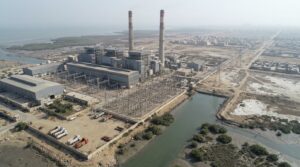
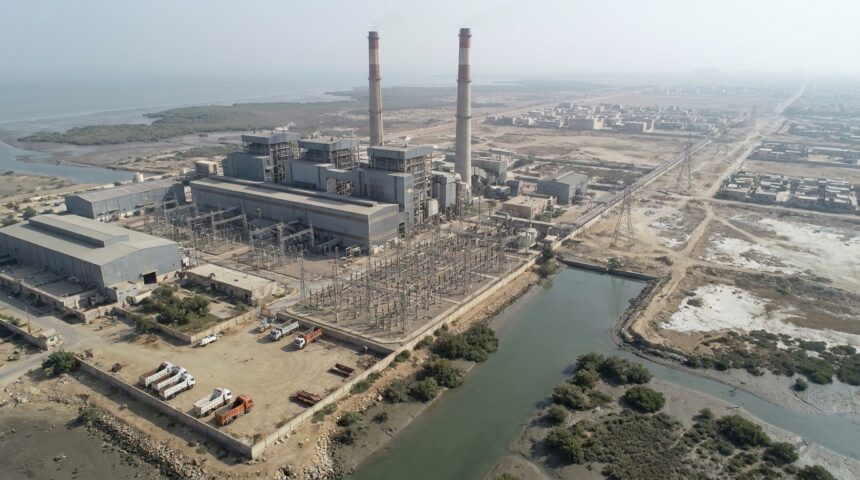
Regasified LNG is imported gas, and the utility burns a large share of it at Bin Qasim Power Station-III. Whatever price PLL writes on the invoice lands straight in Karachi’s generation cost.
Who is who in the dispute
- K-Electric (KE) — Karachi’s power utility and the buyer of the disputed RLNG
- Pakistan LNG Limited (PLL) — state-owned importer that brings in the cargoes and issues the invoices
- Sui Southern Gas Company (SSGC) — supplier of the indigenous gas KE now wants as an alternative fuel
- NEPRA — federal regulator that sets the base tariff and approves fuel charge adjustments
- Sindh High Court — hearing KE’s challenges on both the invoices and the tariff notifications
- Habib Bank Limited and Faysal Bank Limited — issuers of the standby letters of credit PLL tried to encash
May and June 2026 — spot cargoes, spot prices
Global supply disruption triggered force majeure conditions, and PLL imported spot LNG cargoes at the federal government’s direction. The utility was then invoiced for May and June 2026 supply entirely at spot rates rather than at a blended price, as set out in this recorded briefing on the RLNG standoff.
Spot cargoes bought into a tight market cost far more than term contract gas. Every unit generated from that fuel carried the higher number, and KE disputed the pricing method rather than the delivery itself.
July 1, 2026 — a weighted average mechanism is approved
The National Coordination and Management Council approved a unified, weighted average RLNG pricing mechanism on July 1, 2026. Its purpose was to spread the cost of expensive cargoes across all off-takers instead of loading it onto whoever happened to receive a spot shipment. KE’s case is that PLL never applied the mechanism to the May and June invoices.
A pricing formula is not an abstraction in Karachi. Fuel cost is a pass-through item, so the formula chosen upstream decides what appears on the meter.
September 18, 2026 — KE asks NEPRA for permission to burn local gas
While the invoices were in dispute, the utility filed a licence modification application with NEPRA on September 18, 2026, seeking to run Bin Qasim Power Station-III on indigenous gas from Sui Southern Gas Company alongside imported RLNG. The stated reason is cost: local gas is priced domestically, so adding it to the fuel mix cuts the exposure spot cargoes create.
Approval on its own delivers nothing. Without contracted SSGC volumes and the pipeline capacity to move them, the licence is paperwork — a familiar constraint across Pakistan’s domestic energy and materials programmes.
October 7, 2026 — the tariff notifications are suspended
NEPRA had cut the utility’s allowed average base tariff from Rs 39.97 to Rs 32.37 per unit. Karachi saw no corresponding drop, because the federal uniform electricity tariff policy standardises end-consumer rates nationally. After KE challenged the review, the Sindh High Court suspended NEPRA’s tariff notifications on October 7, 2026, freezing the determination where it sat.
Mid-October 2026 — PLL moves on the letters of credit
PLL asked Habib Bank Limited and Faysal Bank Limited to encash standby letters of credit worth roughly Rs 5.729 billion, according to the utility’s corporate disclosure filing. Encashment would have pulled the cash out regardless of who was right about pricing, so the utility treated it as a liquidity event rather than a billing disagreement.
A utility that loses that much working capital in one movement delays fuel procurement. Delayed fuel procurement shows up weeks later as load management.
October 19, 2026 — the Sindh High Court restrains encashment
The Sindh High Court restrained PLL and both banks from encashing the letters of credit on October 19, 2026. The order protects the cash while the case runs. It does not decide whether spot or weighted average pricing applies to the May and June cargoes, so the underlying liability stays on the books.
Late October 2026 — night-time load shedding returns
The utility announced extreme load management, including night-time cuts, citing a gas shortage after shipping disruption through the Strait of Hormuz and Bab al-Mandab delayed winter LNG cargoes; its media statements tie the measures directly to fuel availability. National generation costs rose 24.9% in October 2026 as reduced RLNG availability pushed the system onto imported coal and furnace oil, both dearer per unit than contracted gas.
The expensive substitute fuel is still a pass-through. So the shortage that darkened streets at night also raised the fuel charge adjustment that followed — one reason Karachi data centres engineer around K-Electric load shedding rather than budget for it.
November 3, 2026 — nine instalments, paid under protest
Chief Financial Officer Aamir Ghaziani confirmed that K-Electric offered to pay the Rs 5.729 billion under protest in nine monthly instalments of Rs 636.5 million, running from October 2026 to June 2027, on condition that PLL withdraw the encashment notices and waive late payment surcharges, Profit reported.
Paying under protest keeps the gas flowing and the banks out of it while preserving the claim to Rs 9.9 billion in credits. The pricing question survives the payment.
November 4, 2026 — Sindh sets up its own regulator
Sindh Energy Minister Nasir Hussain Shah announced the Sindh Electric Power Regulatory Authority on November 4, 2026. The provincial government intends to generate and transmit power through the Sindh Transmission and Dispatch Company and set its own rates outside NEPRA’s uniform tariff.
The distance between that announcement and cheaper electricity is considerable. A provincial regulator still needs generation capacity, transmission assets and a settled answer on federal jurisdiction before a Karachi household sees a different rate.
November 18, 2026 — another quarterly adjustment lands at NEPRA
NEPRA took up a quarterly tariff adjustment that would add about Rs 1.34 per unit for consumers nationwide, Karachi included, covering December 2026 to February 2027. K21 News reports the request traces back to the same fuel economics: costlier substitute generation in October has to be recovered somewhere.
Crossing 200 units in a single month moves a household from protected to unprotected status, and reported billing charges can multiply by more than 280%. If your meter sits near the line in December, shaving a few units matters far more than the Rs 1.34 per unit adjustment.
What happens next
Three questions stay open, and the first is the court. Until the Sindh High Court rules on the pricing method, the Rs 5.729 billion sits as a paid-under-protest liability and the Rs 9.9 billion claim stays unresolved, leaving neither balance sheet settled.
Then the fuel. NEPRA’s decision on the Bin Qasim Power Station-III licence modification determines whether SSGC gas displaces imported cargoes in KE’s generation mix during 2027. Of the three strands, it is the only one that lowers fuel cost rather than reallocating it.
Last, the signal. Repeated tariff reversals and multi-billion rupee disputes between utility, importer and regulator read as jurisdiction risk to outside capital, which complicates the federal plan to privatise other distribution companies — the same calculation behind what investors read into Pakistani infrastructure risk. If you run equipment in Karachi, plan for night-time interruptions through the winter and expect the fuel charge adjustment to track cargo prices, not announcements.