
Table of Contents
- What the OPPO Reno 12 in Pakistan Costs in October 2026
- Why the Price Never Fell: Duty, the Rupee and Replacement Cost
- The Hardware Case: What a 2024 Mid-Ranger Still Delivers in 2026
- ColorOS 17: The Final Update That Keeps the Reno 12 Alive
- Reno 12 vs Reno 12F vs a New 2026 Budget Phone: Where the Money Goes
- Buying a Legacy Handset Safely: PTA Status, Warranty and Stock Age
- Limitations of This Analysis, and the Alternatives Worth Considering
- Frequently Asked Questions
- The Verdict
- References
- Related Reading
The OPPO Reno 12 in Pakistan retails for Rs. 147,999 to Rs. 159,999 in October 2026 for the 12GB/512GB 5G model, barely below its mid-2024 launch price.
>
- The price has not collapsed because PTA taxes and rupee depreciation reset the import cost of every replacement model — not because local demand is unusually strong.
- The Reno 12F 5G (12GB/256GB) sits far lower, at roughly Rs. 79,999–89,999.
- OPPO confirmed on October 13, 2026 that the Reno 12 and Reno 12 Pro 5G receive stable ColorOS 17 (Android 17) in Q1 2027 — the third and final major OS upgrade.
- That final update is the main reason resale values and box-packed retail listings are holding, because buyers are getting Android 17 AI features on 2024 hardware.
A two-year-old mid-ranger is not supposed to cost this much. Yet the OPPO Reno 12 in Pakistan still trades between Rs. 147,999 and Rs. 159,999 for the 12GB/512GB 5G variant as of late October 2026, a figure that sits within touching distance of its mid-2024 launch sticker. The explanation is not residual hype. Because the landed cost of importing the Reno 15 and Reno 16 series rose with rupee depreciation and PTA duty, the Reno 12’s original price never had downward room to move — retailers re-anchor old stock against expensive new stock rather than discounting it.
The second force is software. OPPO published its ColorOS 17 rollout schedule on October 13, 2026, confirming that the Reno 12 and Reno 12 Pro 5G reach the stable Android 17 build in Q1 2027. As a result, a buyer today is paying for a known software runway rather than for 2024 silicon alone. This article sets out current prices by variant, the tax and currency mechanics driving them, the spec sheet audited against late-2026 norms, the full ColorOS 17 feature and timeline picture, and a direct verdict on who should buy and who should walk away.
About this analysis: Written by the device and market desk at The Verge PK, which tracks handset pricing, PTA registration rules and local network support for readers in Pakistan and South Asia. Prices quoted reflect public listings on PriceOye, WhatMobile and Hamariweb at the time of writing.
Transparency note: This is independent editorial analysis. No compensation was received from OPPO or any Pakistani retailer. Price bands are observational snapshots, not quotations, and every reader should verify current figures and PTA status before any purchase.
What the OPPO Reno 12 in Pakistan Costs in October 2026
The OPPO Reno 12 in Pakistan costs Rs. 147,999 to Rs. 159,999 for the 12GB RAM / 512GB storage 5G model in October 2026, while the Reno 12F 5G (12GB/256GB) sits at Rs. 79,999 to Rs. 89,999. Listings vary by roughly Rs. 12,000 across local trackers because grey-channel and PTA-approved stock are priced as separate products, and independent local price tracking by WhatMobile Pakistan shows the same model quoted differently depending on whether registration tax is bundled into the figure. Retail listings compiled by PriceOye cluster toward the upper end of that band for registered units.
| Model | RAM / Storage | Price range (PKR) | Network |
|---|---|---|---|
| OPPO Reno 12 | 12GB / 512GB | 147,999 – 159,999 | 5G |
| OPPO Reno 12 Pro | Not stated | Not stated — limited local availability | 5G |
| OPPO Reno 12F | 12GB / 256GB | 79,999 – 89,999 | 5G |
| OPPO Reno 12F | Not stated | Not stated | 4G |
At close to Rs. 160,000, the Reno 12 lands in the segment that Hamariweb’s mobile price brackets classify as premium territory for Pakistani buyers. Which means the device has effectively stopped competing on cost. It now competes on build quality and remaining software life against cheaper 2026 releases — a position that only holds while the ColorOS 17 commitment stands.
Run the depreciation math and the anomaly sharpens. A mid-range handset two years into its life would normally shed a substantial share of its launch value in most markets, driven by successor pressure and falling component costs. OPPO’s Reno 12 has shed very little in nominal rupee terms. That gap is attributable to currency and duty rather than to unusually durable demand, and the distinction matters: a price held up by import economics behaves differently from a price held up by desirability, because the former can reverse quickly if the rupee strengthens or duty structures change.
Why the Price Never Fell: Duty, the Rupee and Replacement Cost
The Reno 12 holds its price because the landed cost of its replacements rose faster than its own hardware aged. This is replacement-cost anchoring, and it is the dominant mechanism in Pakistan’s handset market. PTA registration charges and import duty are levied on device value in a currency that has been depreciating against the dollar, therefore each newer Reno generation arrives at a higher rupee sticker than the one before it. The consequence is counterintuitive but mechanical: every time a successor lands at an elevated price, the Reno 12 is re-priced upward relative to its specification instead of being marked down.
The currency channel works through inventory. A flat wholesale price in dollars becomes a rising retail price in rupees as the exchange rate moves, which means a retailer holding 2024 stock is holding an asset that appreciates in nominal terms simply by sitting on a shelf. Clearing that stock at a discount would mean replacing it with new stock purchased at a worse rate. Consequently retailers hold rather than clear, and the visible result is a price curve that flattens out instead of sloping down. The effect compounds across the channel, because distributors face the same arithmetic.
The numbers behind the flat price curve
>
- Rs. 147,999–159,999 — Reno 12 5G retail band, October 2026
- Launch year: mid-2024 — over two years of ownership with minimal nominal depreciation
- Rs. 79,999–89,999 — Reno 12F 5G, showing how far the series spreads under one brand name
The third mechanism is the registration premium. Because cellular service depends on a handset being registered against its IMEI under the Pakistan Telecommunication Authority’s device verification regime, a PTA-registered unit carries a visible markup over an unregistered one. That splits a single model into two price tiers in the same market. The upper tier stays high because the registration cost is unavoidable for anyone who intends to use the phone on a local network, and the lower tier exists mainly for buyers who either already hold registration or accept the service risk. Readers should treat specific duty percentages with caution — the structure is well documented, the exact rates change.
The Hardware Case: What a 2024 Mid-Ranger Still Delivers in 2026
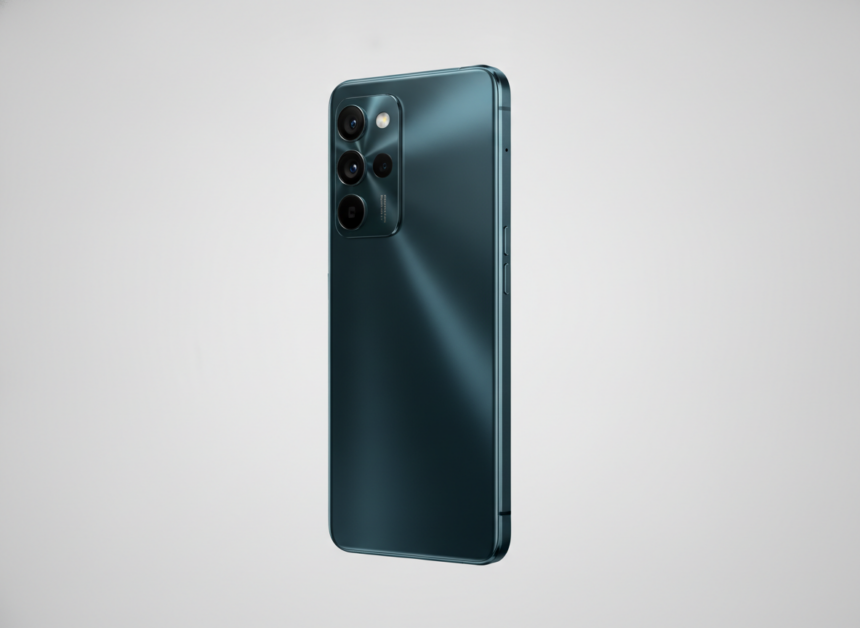
The Reno 12 was over-specified at launch, which is why its display, charging and camera hardware still meet late-2026 mid-range standards. The MediaTek Dimensity 7300 Energy chipset, 6.7-inch 120Hz AMOLED panel, 50MP triple camera with optical image stabilisation and 80W fast charging that fills the battery from 0 to 100% in 46 minutes all sat above the 2024 mid-range baseline. Because that baseline has risen more slowly than prices have, the same components clear the 2026 bar.
| Component | Specification |
|---|---|
| Chipset | MediaTek Dimensity 7300 Energy |
| Display | 6.7-inch AMOLED, 120Hz refresh rate |
| Rear cameras | 50MP triple camera with OIS, including telephoto |
| Video capture | 4K recording |
| Charging | 80W wired, 0–100% in 46 minutes |
| Durability | Corning Gorilla Glass 7i, IP65 rating |
| Launch software | Android 14 (ColorOS 14.1) |
| Final major OS upgrade | ColorOS 17 (Android 17), scheduled Q1 2027 |
Build quality carries more weight in a legacy purchase than in a new one. Gorilla Glass 7i and an IP65 rating are the kind of specification that budget 2026 handsets trim to hit a price point, and a device bought in late 2026 needs to survive into 2029 to justify a Rs. 150,000 outlay. Durability, therefore, is not a nice-to-have on this particular purchase — it is the component of the spec sheet doing the most work to defend the price.
Where the Reno 12 has genuinely aged deserves equal honesty. Sustained performance and power efficiency now trail newer Dimensity and Snapdragon mid-range parts, because process-node and architecture improvements have continued since 2024. Modem generations have moved on, which affects peak throughput and efficiency on 5G rather than basic connectivity. And the 2024 image signal processor constrains computational photography relative to 2026 competitors, so the 50MP sensors are let down somewhat by the silicon behind them. None of these are failures; all of them are reasons a buyer prioritising raw performance per rupee should look elsewhere.
ColorOS 17: The Final Update That Keeps the Reno 12 Alive
The OPPO Reno 12 in Pakistan is scheduled to receive stable ColorOS 17, based on Android 17, in Q1 2027. OPPO confirmed the rollout schedule on October 13, 2026, placing the Reno 12 and Reno 12 Pro 5G behind the Find X10 flagship series, which received the stable build in October 2026 according to OPPO’s official ColorOS communications.
- October 13, 2026 — OPPO publishes the official ColorOS 17 rollout schedule
- October 2026 — Find X10 flagship series receives the stable build first
- Subsequent waves — current-generation Reno and A-series devices, per OPPO’s published device tiers
- Q1 2027 — OPPO Reno 12 and Reno 12 Pro 5G receive stable ColorOS 17
- Post-rollout — the Reno 12 enters security-patch-only support, because ColorOS 17 is its third and final major OS upgrade
The support chain explains the finality. The Reno 12 shipped on Android 14 with ColorOS 14.1 against a commitment of three major OS upgrades, which means ColorOS 17 is the third and last. The consequence should be stated precisely rather than softened: security patching continues for a defined window under OPPO’s published policy, but the feature ceiling for this device becomes fixed once the Q1 2027 build lands. There is no fourth upgrade to wait for.
Counterintuitively, a terminal update tends to support resale value rather than depress it. Because the remaining software life becomes certain instead of speculative, buyers can price the device against a known endpoint — and a known endpoint is easier to underwrite than an open question. That certainty is precisely what keeps box-packed retail listings near Rs. 150,000 and makes holding rather than upgrading a rational choice for existing owners. Reporting from Gizmochina on the update’s internals supports the practical case, and our broader AI coverage tracks how these on-device features are developing across vendors.
- Living Flow design — reworked interface and animation system tuned to run smoothly on the Dimensity 7300
- Expanded AI Eraser for object removal in photographs
- AI Studio generative image tools
- Fluid Cloud and split-screen multitasking improvements
- Reduced background memory usage — the single most consequential change for a two-year-old device
5 Critical AI Governance Challenges in Multi-Institution Research Labs – theverge.pk
The AI story warrants scepticism. AI Eraser and AI Studio run against a 2024-generation NPU, therefore some generative workloads will fall back to cloud processing rather than executing locally, a pattern corroborated in GizChina’s ColorOS 17 coverage of the Android 17 base. That split matters beyond performance. Handing personal images to a cloud model raises documented data-handling and transparency considerations of the kind catalogued in the NIST AI Risk Management Framework, and the proprietary nature of vendor AI stacks is exactly why open standards in AI matter for consumer devices as much as for research systems. Users who process sensitive photographs should check which features run on-device before relying on them.
Reno 12 vs Reno 12F vs a New 2026 Budget Phone: Where the Money Goes
Buyers who shoot 4K video and want a telephoto lens get more from a Reno 12 at Rs. 150,000; buyers optimising for cost per year of service get more from the Reno 12F at around Rs. 85,000; and buyers who expect to keep a handset past 2029 should buy a new 2026 device instead of either.
| Option | Price (PKR) | Camera highlight | Charging | Major OS upgrades left |
|---|---|---|---|---|
| OPPO Reno 12 5G | 147,999 – 159,999 | 50MP triple with OIS, telephoto, 4K video | 80W, 46 min to full | One (ColorOS 17, Q1 2027) |
| OPPO Reno 12F 5G | 79,999 – 89,999 | Not stated | Not stated | Not stated |
| New 2026 entry-level 5G handset | 80,000 – 100,000 | Typically no telephoto lens | Typically lower wattage | Full current-generation cycle |
The feature-stripping argument favours the legacy buy. Entry-level 2026 handsets hit their price points by cutting the components that are expensive to build: telephoto lenses, 4K capture pipelines, high-wattage charging circuitry and premium glass. Consequently a legacy premium mid-ranger can out-specify a new cheap phone on exactly the hardware that cannot be added later by software. If photography and charging speed are the deciding factors, the Reno 12 wins that comparison on specification.
The counter-argument is equally clear and should not be buried. A new 2026 device starts its major-upgrade clock from zero, while the Reno 12’s major-upgrade life ends in Q1 2027. Driven by that gap, the calculation inverts for anyone planning a four- or five-year hold: a cheaper handset with a longer software horizon delivers more usable life than a better-specified one that stops receiving feature updates in early 2027. The honest framing is that the Reno 12 is a three-year phone bought in year three.
Buying a Legacy Handset Safely: PTA Status, Warranty and Stock Age
Confirm PTA registration status before paying, because an unregistered handset loses cellular service once its grace window closes. The two failure modes when buying a 2024 device in late 2026 are an unregistered IMEI and a calendar-aged battery, and both are checkable before money changes hands.
The battery point follows straightforward chemistry. Lithium-ion cells degrade on calendar age as well as charge-cycle count, which means even genuinely box-packed 2024 stock arrives with reduced usable capacity relative to its rated figure. The practical consequence is that the 80W charging specification matters more on a legacy purchase than the headline mAh number does, because fast top-ups partially compensate for a cell that no longer holds its original charge.
- Verify the IMEI against PTA’s device verification system and confirm the handset is registered — not merely a “PTA-approved model”
- Confirm whether the quoted price includes PTA registration tax or excludes it
- Ask for the manufacture or import date, because calendar-aged batteries lose capacity even unused
- Check the current software version and whether the unit is eligible for the Q1 2027 ColorOS 17 build
- Confirm remaining official OPPO Pakistan warranty and keep the invoice for any service claim
- Test 5G band support on your own SIM and operator before completing payment
Limitations of This Analysis, and the Alternatives Worth Considering
Pricing volatility. The Rs. 147,999–159,999 band reflects October 2026 listings on PriceOye, WhatMobile and Hamariweb. Because rupee movements and duty revisions feed through to retail within weeks, readers must verify current prices directly before purchase rather than relying on this snapshot.
Rollout risk. OPPO’s Q1 2027 ColorOS 17 schedule for the Reno 12 is a published plan, not a shipped build. Regional staged rollouts frequently slip, therefore the Pakistani release could arrive later than the global Q1 window. Anyone buying specifically for ColorOS 17 should wait for confirmation that the build has landed on local units.
Unit-level variance. Battery health, panel wear and storage condition differ across two-year-old inventory, which means no single verdict applies to every unit on sale. A well-kept unit and a heavily used one carry the same model number and very different value.
Alternatives, stated plainly. A new 2026 entry-level 5G handset resets the update clock entirely. The Reno 12F delivers a lower cost per year of service at roughly half the price. And a current-generation Reno 15 or Reno 16 unit, where locally available, offers a longer software horizon at a higher outlay. Buyers who prioritise long-term updates over current specification should take one of those routes.
Frequently Asked Questions
How much does the OPPO Reno 12 cost in Pakistan right now?
The OPPO Reno 12 in Pakistan retails for Rs. 147,999 to Rs. 159,999 for the 12GB/512GB 5G variant as of October 2026. Listings differ by roughly Rs. 12,000 across local trackers because retailers price stock independently. PTA-registered units sit at the upper end of that band, because registration cost is built into the figure rather than added afterward.
Will the OPPO Reno 12 get ColorOS 17?
Yes — OPPO confirmed on October 13, 2026 that the Reno 12 and Reno 12 Pro 5G receive stable ColorOS 17, based on Android 17, in Q1 2027. This is the third and final major OS upgrade under the original three-upgrade commitment the device shipped with, which means no fourth Android version is scheduled for this hardware.
Is the OPPO Reno 12 still worth buying in 2026?
Yes for buyers who want 4K video, a telephoto lens and 80W charging at Rs. 150,000 — no for buyers who need more than one further major Android upgrade. The hardware was over-specified at launch, therefore it still clears 2026 mid-range standards. But its major-update life ends in Q1 2027, which caps how long it stays current.
What is the difference between the OPPO Reno 12 and the Reno 12F?
The price gap is the headline: Rs. 147,999–159,999 for the Reno 12 5G against Rs. 79,999–89,999 for the Reno 12F 5G. The Reno 12 carries the Dimensity 7300 Energy, a 50MP triple camera with OIS and 80W charging. The 12F is the downgraded variant, which suits buyers optimising cost per year rather than specification.
Why are old phones still so expensive in Pakistan?
Because prices here are set by replacement cost in rupees, not by the age of the device. Rupee depreciation and PTA duty raise the landed cost of each new generation, which means a successor arrives dearer than its predecessor did. Consequently retailers hold legacy stock at near-launch prices instead of discounting it, since clearing it means restocking at worse rates.
Does the OPPO Reno 12 support 5G on Pakistani networks?
The Reno 12 is a 5G handset built on the MediaTek Dimensity 7300 Energy with a 5G modem. Device capability and network availability are separate questions, however. Band support and local 5G coverage must be verified on your own SIM and operator before purchase, because a 5G-capable phone delivers nothing without a 5G service to connect to.
What AI features does ColorOS 17 add to the Reno 12?
ColorOS 17 brings expanded AI Eraser object removal, AI Studio generative image tools, Fluid Cloud and split-screen multitasking improvements, and reduced background memory usage. Some generative features depend on cloud processing because the 2024-generation NPU limits on-device inference, which has privacy implications for any image uploaded for processing.
How long will the OPPO Reno 12 receive security updates?
Major OS upgrades end with ColorOS 17 in Q1 2027, while security patching continues for a further period under OPPO’s published policy. Buyers should check OPPO’s official support documentation for the exact patch end-date for their region and model, rather than relying on a retailer’s verbal assurance at the point of sale.
The Verdict
The case of the OPPO Reno 12 in Pakistan shows that device prices here track currency and duty far more closely than they track hardware age. Replacement-cost anchoring keeps the 2024 sticker intact because every newer Reno generation lands at a higher rupee price, and the confirmed Q1 2027 ColorOS 17 upgrade supplies the second pillar — a certain software endpoint that buyers can price against rather than guess at.
The position is this: at Rs. 150,000 the Reno 12 is defensible for buyers who specifically value its 50MP OIS camera system, 4K capture and 80W charging, and who plan a three-year hold. It is indefensible for anyone who intends to keep the same handset past 2029, because the major-upgrade life ends in early 2027 regardless of how well the hardware holds up.
Two actions before you pay: check the IMEI’s PTA registration status and the current retail band, since both move faster than any published analysis. And if ColorOS 17 is the reason for the purchase, confirm the stable build has actually landed on local units first.
Read more in our technology and device coverage.
References
- PriceOye — Current retail listings for the OPPO Reno 12 5G and Reno 12F 5G in PKR, October 2026.
- WhatMobile Pakistan — Independent local price tracking and variant confirmation for the Reno 12 series.
- Hamariweb Mobile Prices — Price-bracket classification placing a Rs. 160,000 handset in the premium segment for Pakistani buyers.
- OPPO — Official ColorOS — October 13, 2026 ColorOS 17 rollout schedule, Find X10 first and Reno 12 / Reno 12 Pro 5G in Q1 2027, plus the three-major-upgrade commitment.
- Gizmochina — Reporting on ColorOS 17’s Living Flow design, AI Eraser, AI Studio and memory-management changes.
- GizChina — Corroborating coverage of the ColorOS 17 feature set and the Android 17 base version.
- Pakistan Telecommunication Authority — Device registration and IMEI verification requirements.
- NIST AI Risk Management Framework — Data-handling and transparency considerations for cloud versus on-device AI processing.