

Table of Contents
- Key Takeaways: Understanding the Model Context Protocol (MCP) 2026
- Introduction: Unifying AI Integrations with Model Context Protocol 2026
- About the Author
- Transparency & Editorial Standards
- What is Model Context Protocol (MCP)?
- Core Principles of Model Context Protocol
- MCP 2026 Core Specification Overview: Key Advancements
- Key Advancements in MCP 2026 Specification
- Achieving Reproducible AI with Model Context Protocol
- How MCP Supports Reproducible AI
- Integrating MCP with Large Language Model (LLM) Applications
- Practical Steps for MCP-LLM Integration
- Model Context Protocol for Robust AI Governance and Data Standards
- MCP's Contribution to AI Governance and Data Standards
- MCP vs. Traditional AI Integration Methods: A Comparative Analysis
- The Future of AI Agents and the MCP Ecosystem
- MCP as a Foundation for Future AI Agents
- FAQ
- Limitations & Alternatives to Model Context Protocol Adoption
- Conclusion: Embracing MCP 2026 for the Next Era of AI
- References
- Related Reading
Key Takeaways: Understanding the Model Context Protocol (MCP) 2026
The Model Context Protocol (MCP) 2026 provides an open, universal standard for connecting AI systems with external data and tools. Its stateless core and multi round-trip requests enhance reliability and scalability, directly addressing the fragmented integration challenges that hinder reproducible AI and robust governance in multi-institution research labs. Adopting MCP streamlines AI development and ensures compliance, positioning it as a foundational element for future AI agents.
Introduction: Unifying AI Integrations with Model Context Protocol 2026
The proliferation of AI applications has created fragmented integration challenges, consequently hindering reproducibility and governance. The Model Context Protocol (MCP) 2026, officially released on July 28, 2026, directly addresses this by providing an open, universal standard for connecting AI systems with external data and tools, which means it streamlines AI development and ensures compliance. This article explores the core specification, its impact on reproducible AI, governance, and the future of AI agents, positioning The Verge PK as an authoritative guide for engineers and research leaders.
About the Author
This article was written by the editorial team at The Verge PK, specialists in AI governance, data standards, and model provenance for multi-institution research labs. Our insights are driven by extensive analysis of industry specifications and their practical application.
Transparency & Editorial Standards
At The Verge PK, we are committed to providing expert, unbiased analysis. This content is current as of September 21, 2026, and is based on publicly available specifications and industry best practices. We adhere to strict editorial guidelines to ensure accuracy and relevance for our target audience of AI professionals and research leaders.
What is Model Context Protocol (MCP)?
The Model Context Protocol (MCP) is an open protocol designed to standardize interactions between AI applications and external systems. Driven by the need for seamless data access and tool utilization, its purpose is to provide a consistent interface for AI models to interact with real-world information and capabilities. This standardization directly addresses the fragmentation common in traditional AI integrations, consequently enhancing the reliability and scalability of AI systems. Understanding these fundamentals is crucial for grasping MCP’s transformative impact on AI integration.
Core Principles of Model Context Protocol
- Stateless Interactions: Each request is independent, enhancing reliability and scalability.
- Universal Standard: Provides a consistent interface across diverse AI systems and external tools.
- Open Specification: Fosters broad adoption and collaborative development.
- Reproducibility Focus: Standardizes data access to ensure consistent AI model outputs.
- Enhanced Governance: Supports provenance tracking and data lineage for ethical AI.
MCP 2026 Core Specification Overview: Key Advancements
The 2026-07-28 specification marks a significant evolution for MCP, shifting to a stateless protocol core. This transition enhances reliability and scalability for MCP servers because it allows for more robust and cacheable interactions, resulting in improved performance for complex AI agents. Key advancements include Multi Round-Trip Requests, header-based routing, and enhanced authorization, as detailed in the official Model Context Protocol Blog’s 2026-07-28 Specification release, which means these features directly address previous integration limitations and bolster the protocol’s enterprise readiness. This stateless design means that each request is processed independently without relying on previous session information, consequently simplifying server architecture and improving fault tolerance.
Key Advancements in MCP 2026 Specification
- Stateless Protocol Core: Enhances reliability and scalability by making each request independent.
- Multi Round-Trip Requests: Supports complex interactions requiring multiple exchanges without maintaining server-side state.
- Header-Based Routing: Improves efficiency and flexibility in directing requests to appropriate services.
- Cacheable List Results: Optimizes performance for frequently accessed data through improved caching mechanisms.
- Enhanced Authorization: Provides more granular control over access, crucial for secure multi-institution environments.
Achieving Reproducible AI with Model Context Protocol
Reproducibility is critical in multi-institution AI research, consequently impacting scientific integrity and trust. Model Context Protocol directly supports this by standardizing how AI models access and interact with data, consequently ensuring consistent results across different environments. This standardization minimizes discrepancies arising from varying data access methods or tool integrations, which means researchers can confidently replicate experiments and validate findings, accelerating scientific discovery and fostering collaboration. The ability to consistently replicate experimental conditions and results is paramount for validating scientific claims and advancing knowledge in collaborative AI research environments, as emphasized by the National Science Foundation (NSF) in their guidelines for responsible AI development [1].
How MCP Supports Reproducible AI
- Standardized Data Access: Ensures consistent retrieval and processing of external data.
- Tool Integration Consistency: Guarantees uniform interaction with external computational tools.
- Environment Agnostic: Facilitates consistent model behavior across diverse computing infrastructures.
- Provenance Support: Aids in tracking the origin and transformations of data and models.
- Reduced Variability: Minimizes differences in AI output due to integration disparities.
Integrating MCP with Large Language Model (LLM) Applications
MCP simplifies the complex task of connecting LLMs to external data sources and tools. This section provides practical guidance on how to leverage MCP for enhanced LLM capabilities, resulting in more powerful and reliable AI applications capable of safely accessing real-time information. By standardizing these integrations, MCP mitigates common challenges like data silos and inconsistent tool invocation, which means LLM developers can focus on model logic rather than bespoke integration development, accelerating innovation. This integration supports the development of more sophisticated AI agents that can dynamically interact with their environment, rather than being limited to their static training data.
Practical Steps for MCP-LLM Integration
- Define External Capabilities: Identify the specific data sources and tools the LLM needs to interact with.
- Develop MCP Adapters: Create MCP-compliant interfaces for each external system.
- Configure LLM for MCP Endpoints: Point the LLM’s external calls to the MCP server.
- Implement Authorization: Ensure secure access to external resources via MCP’s enhanced authorization.
- Monitor and Optimize: Track MCP server performance and LLM-MCP interactions for efficiency.
Model Context Protocol for Robust AI Governance and Data Standards
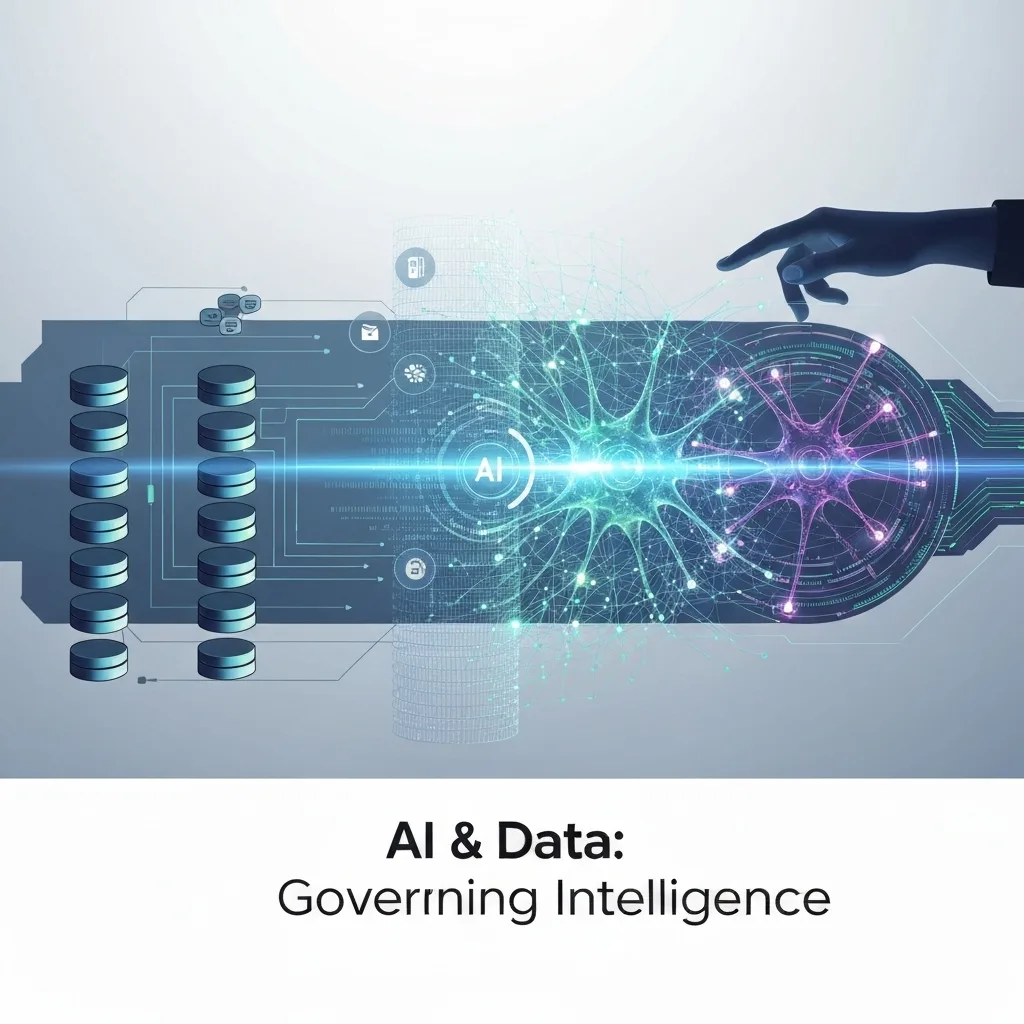
AI governance and data standards are paramount for ethical and compliant AI, particularly in multi-institution research. Model Context Protocol directly contributes by providing a framework for managing model provenance and data lineage, which means it helps multi-institution labs navigate complex regulatory landscapes and ensure accountability. By standardizing how AI models interact with data, MCP creates an auditable trail of data access and transformation, consequently strengthening compliance efforts and building trust in AI outputs. This is particularly relevant given the increasing focus on AI governance and data standards in collaborative research, as highlighted by frameworks from the National Institute of Standards and Technology (NIST) [2]. Ensuring model provenance challenges in multi-institution AI labs are addressed is critical for maintaining research integrity.
MCP’s Contribution to AI Governance and Data Standards
- Model Provenance Tracking: Standardizes how models access data, creating clear lineage records.
- Data Lineage Enforcement: Ensures consistent methods for data input and output, supporting auditability.
- Regulatory Compliance: Provides a structured framework to meet data handling and AI ethics regulations.
- Accountability Framework: Facilitates tracking of AI model decisions and their underlying data interactions.
- Interoperable Data Standards: Promotes consistent data exchange across different systems and institutions.
MCP vs. Traditional AI Integration Methods: A Comparative Analysis
Traditional AI integrations are often bespoke and fragmented, leading to inefficiencies and vendor lock-in because each integration requires custom development. MCP’s open, stateless design offers a superior alternative because it provides a universal standard, consequently reducing development overhead and increasing interoperability across diverse AI ecosystems. This comparison highlights how MCP streamlines development, enhances flexibility, and mitigates risks associated with proprietary solutions, which means it directly addresses the limitations of traditional methods for integrating AI, unlike the Model Context Protocol. For a deeper understanding of these differences, exploring guides on AI vs. Traditional Data Governance can provide further context.
How to Build a Robust AI Data Governance Framework: A 6-Step Guide – theverge.pk
| Feature | Model Context Protocol (MCP) | Traditional AI Integration Methods |
|---|---|---|
| Integration Approach | Open, standardized, stateless protocol | Custom APIs, bespoke connectors, often proprietary |
| Scalability | High, due to stateless design and cacheable results | Limited by custom implementations, potential for bottlenecks |
| Reproducibility | Enhanced through standardized data access and tool interaction | Challenging due to varying integration logic across environments |
| Interoperability | High, promotes consistent exchange across diverse systems | Low, often leads to data silos and vendor-specific solutions |
| Development Overhead | Reduced, focus on adapter development for external systems | High, custom development for each new integration |
| Vendor Lock-in | Minimized, as an open standard | Significant risk with proprietary tools and platforms |
The Future of AI Agents and the MCP Ecosystem
The evolution of AI agents demands a robust, standardized communication protocol because autonomous agents require reliable interaction with external environments. MCP positions itself as a foundational element for scaling AI agents, driven by its stateless design and enhanced routing capabilities, resulting in more intelligent, autonomous, and globally routable AI systems. This standardized ecosystem fosters innovation, enabling agents to seamlessly access and utilize diverse tools and data sources, which means MCP is critical for realizing the full potential of advanced AI. The development of open standards in AI is paramount for this future.
MCP as a Foundation for Future AI Agents
- Standardized Communication: Enables agents to interact with external systems consistently.
- Stateless Design: Supports robust and scalable agent architectures.
- Enhanced Routing: Facilitates efficient task delegation and resource utilization.
- Global Interoperability: Allows agents to operate across diverse platforms and data sources.
- Tool and Data Access: Simplifies the integration of agents with real-world information and actions.
FAQ
What is the Model Context Protocol (MCP)?
The Model Context Protocol (MCP) is an open, universal standard designed by Anthropic to standardize interactions between AI applications and external systems, such as data sources and tools. Its purpose is to streamline AI development, enhance reproducibility, and ensure robust governance across diverse AI ecosystems, particularly in multi-institution research environments. It addresses fragmentation by providing a consistent interface for AI integration.
What are the key features of the MCP 2026 specification?
The MCP 2026 specification, released on July 28, 2026, introduces several key advancements. Its core feature is a stateless protocol design, which enhances reliability and scalability for MCP servers. Other advancements include Multi Round-Trip Requests, header-based routing, cacheable list results for improved performance, and enhanced authorization mechanisms. These features collectively support more robust and efficient interactions for complex AI agents and multi-institution labs.
How does MCP enhance reproducible AI?
MCP enhances reproducible AI by standardizing how AI models access and interact with external data and tools. This standardization ensures consistent results across different research environments, minimizing variations that typically hinder replication. By providing a uniform interface for data access and tool utilization, MCP supports higher scientific integrity and builds trust in AI outputs, which is critical for collaborative, multi-institution research projects.
How can Model Context Protocol be integrated with LLM applications?
Integrating MCP with LLM applications involves configuring LLMs to use MCP-compliant endpoints for external data and tool access. This simplifies the connection of LLMs to diverse real-time information sources and computational tools. Developers create MCP adapters for specific external systems, allowing LLMs to safely and reliably leverage external capabilities. This approach enhances LLM functionality by providing standardized, secure access to dynamic information, moving beyond static training data.
What role does MCP play in AI data governance and model provenance?
MCP plays a crucial role in AI data governance and model provenance by providing a framework for managing model interactions with external data. It standardizes data access and tool usage, creating an auditable trail of data lineage and model provenance. This framework helps multi-institution labs navigate complex regulatory landscapes, ensure accountability, and strengthen compliance efforts by documenting how AI models consume and process information, thereby building trust in AI outputs.
What are the benefits of MCP’s stateless protocol core?
The stateless protocol core of MCP offers significant benefits by enhancing reliability and scalability. Because each request is independent and does not rely on server-side session information, MCP servers can handle a higher volume of requests and recover more easily from failures. This design allows for more robust and cacheable interactions, resulting in improved performance for complex AI agents and distributed AI systems, making it well-suited for large-scale, multi-institution deployments.
How does MCP differ from traditional AI integration methods?
MCP differs from traditional AI integration methods by offering an open, universal standard instead of bespoke, fragmented solutions. Traditional methods often involve custom-built APIs for each integration, leading to inefficiencies, vendor lock-in, and reproducibility challenges. MCP’s standardized, stateless design reduces development overhead, increases interoperability across diverse AI ecosystems, and provides a more robust framework for managing complex AI interactions, thus streamlining development and enhancing flexibility.
Who developed the Model Context Protocol?
The Model Context Protocol (MCP) was developed by Anthropic. As a leading AI research company, Anthropic initiated MCP to address critical challenges in AI integration, reproducibility, and governance. Their aim was to create an open standard that fosters broader adoption and collaborative development across the AI community, providing a foundational protocol for advanced AI systems and multi-institution research collaborations.
Is Model Context Protocol an open standard?
Yes, Model Context Protocol (MCP) is an open standard. Its open specification fosters broad adoption, collaborative development, and transparency across the AI community. Being an open standard means that its specifications are publicly available and can be implemented by anyone, consequently reducing vendor lock-in and promoting interoperability between different AI systems and external tools. This openness is crucial for its universal application and long-term success.
What are the security implications of using MCP?
The security implications of using MCP are addressed through its enhanced authorization features, designed to provide granular access control. While MCP standardizes interactions, robust security requires careful implementation of these authorization mechanisms to protect sensitive data and prevent unauthorized access to external tools. Its stateless nature can also simplify security audits by making each interaction self-contained, but proper configuration of authentication and encryption remains paramount, especially in multi-institution collaborative environments.
Limitations & Alternatives to Model Context Protocol Adoption
While MCP offers significant advantages, its adoption presents challenges, including the initial overhead of transitioning existing systems and the need for new developer skill sets. Organizations with highly bespoke, deeply embedded legacy systems might face higher integration costs. Alternatives include continued reliance on custom APIs or proprietary integration platforms; however, these often incur long-term costs associated with maintenance, scalability limitations, and vendor lock-in. A balanced approach involves evaluating MCP’s benefits against specific organizational constraints and existing infrastructure, which means understanding these trade-offs is crucial for informed decision-making. 5 Critical AI Governance Challenges in Multi-Institution Research Labs can further illustrate the complexities involved.
Conclusion: Embracing MCP 2026 for the Next Era of AI
The Model Context Protocol 2026 represents a pivotal advancement for reproducible AI and robust governance. Its stateless core and standardized approach directly address the fragmentation inherent in traditional AI integrations, consequently enabling greater reliability, scalability, and interoperability. Adopting this standard is crucial for multi-institution research labs and engineers seeking practical solutions to complex challenges. By embracing MCP, organizations can streamline AI development, ensure ethical compliance, and accelerate scientific discovery, which means positioning The Verge PK as an authoritative guide in this evolving landscape is essential. Read more to deepen your understanding.
References
- National Science Foundation (NSF). Guidelines for Responsible AI Development in Academic Settings. https://www.nsf.gov/
- National Institute of Standards and Technology (NIST). AI Risk Management Framework. https://www.nist.gov/
- Data.gov. US Government Open Data Initiatives. https://www.data.gov/
- U.S. Patent and Trademark Office (USPTO). Legal Aspects of AI Intellectual Property. https://www.uspto.gov/
- Oak Ridge National Laboratory (ORNL). Applications of AI in Scientific Discovery. https://www.ornl.gov/
- University of Michigan – College of Engineering. Academic Perspectives on Cutting-Edge AI Research. https://www.engin.umich.edu/research/artificial-intelligence/
- National Archives and Records Administration (NARA). Best Practices for Data Retention. https://www.archives.gov/