
The concept of a self-driving laboratory sounds like science fiction: autonomous robots and intelligent algorithms working 24/7 to unlock the next great scientific breakthrough. While the reality is more nuanced, these facilities represent a monumental shift in how research is conducted. Yet, the term is often misunderstood, confused with simple automation or exaggerated in capability. This definitive guide cuts through the noise. We will provide a clear self-driving labs definition, explore the core components that make them work, and weigh their transformative benefits against their very real limitations and ethical questions. Forget the hype; this is the balanced overview you need to understand the future of automated scientific discovery.
### Table of Contents
## The Core Concept: What Exactly is a Self-Driving Lab?
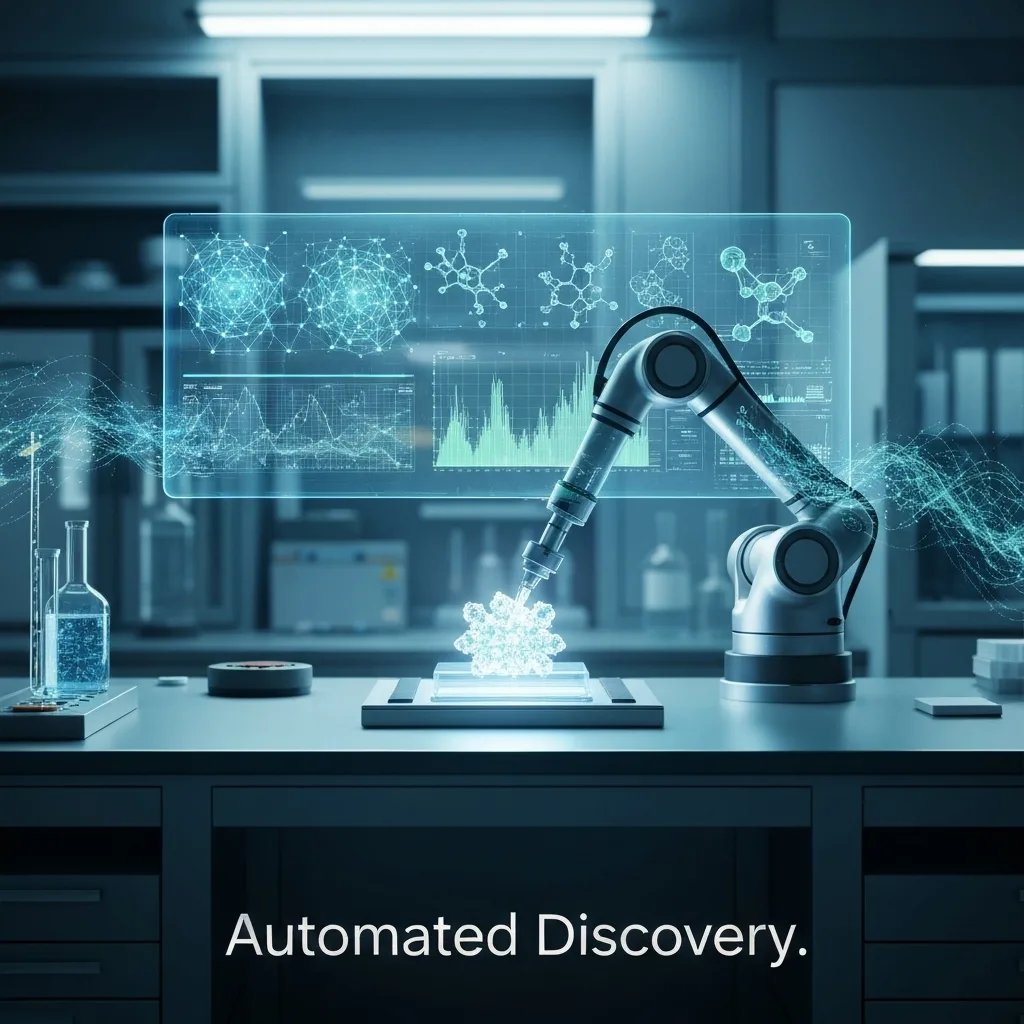
At its heart, a self-driving laboratory is an integrated system where artificial intelligence, robotics, and scientific instrumentation work together in a continuous, closed loop. Unlike traditional labs where humans design, execute, and analyze experiments sequentially, an autonomous experimental platform can perform this entire cycle on its own, learning from each result to intelligently decide on the next experiment.
### Defining the Autonomous Experimental Platform
So, what is a self-driving laboratory? It’s a facility that automates the entire scientific method. An AI model hypothesizes based on existing data, a robotic system performs the physical experiment, sensors collect the results, and the AI analyzes that new data to refine its understanding and formulate the next hypothesis. This creates a powerful cycle of closed-loop scientific research that can explore vast experimental spaces far more efficiently than human teams.
### The Key Components: AI Brains and Robotic Hands
Two primary elements define these advanced labs. First is the extensive use of robotics in labs, which handle the physical tasks: mixing chemicals, moving samples, and operating measurement devices with high precision. Second, and more importantly, is the layer of AI automation in labs. This isn’t just pre-programmed automation; it’s an AI model, often using machine learning, that acts as the ‘brain’ of the operation, making real-time decisions to guide the research toward a specific goal.
### AI’s Decisive Role in Closing the Loop of Discovery
The true power of AI in scientific discovery within these labs is its ability to close the research loop. The AI doesn’t just analyze data after the fact; it actively steers the experimental path. By identifying the most promising avenues of inquiry from previous results, it eliminates dead ends and accelerates the journey toward discovery, making the entire process dynamic and intelligent.
## The Impact: Benefits and Real-World Applications
By automating the research cycle, self-driving labs offer transformative advantages in speed, efficiency, and the very nature of what can be discovered. They are already making significant inroads in fields that require massive-scale experimentation.
### Key Advantages of Autonomous Research
The primary benefits of automated labs are staggering. They can operate 24/7, dramatically increasing experimental throughput. This automation leads to improved reproducibility in research, as robotic precision minimizes human error and variability. Most importantly, they allow scientists to tackle problems of a scale and complexity that were previously unimaginable, freeing up human intellect for higher-level strategy, creative problem-solving, and interpretation of the results.
### Revolutionizing Materials Science and Drug Discovery
Nowhere is the impact more evident than in accelerated materials science and drug discovery. Self-driving labs can systematically test thousands of chemical compounds to discover new materials with desired properties, like better batteries or more efficient solar cells. In medicine, they enable high-throughput screening and leverage AI for drug discovery to identify promising new therapeutic candidates in a fraction of the time. These labs are a cornerstone of the rapidly advancing field of AI-accelerated experimental physics.
### Pioneering Examples of Self-Driving Labs in Action
Several pioneering self-driving labs examples are already operational. According to The Matter Lab at the University of Toronto, their AI-driven system is actively used to discover new materials for renewable energy applications. IntuitionLabs reports that automated laboratories are significantly accelerating new medicine development in the pharmaceutical industry by increasing efficiency, accuracy, and data analysis capabilities. These facilities are no longer theoretical; they are active research platforms pushing the boundaries of science today.
## The Reality Check: Limitations, Costs, and Common Misconceptions
While the potential is immense, it’s crucial to have a realistic perspective. Self-driving labs are not a magic bullet, and they come with significant challenges, ethical questions, and key distinctions from simpler forms of automation.
### Acknowledging the Challenges and Current Drawbacks
One of the most significant self-driving labs limitations is the upfront investment. The cost of self-driving labs, including robotics, sensors, and specialized software, can be prohibitively high. Furthermore, a lack of standardization in autonomous labs means that integrating hardware and software from different vendors can be a major engineering hurdle. These systems also generate enormous amounts of data, which requires robust infrastructure for storage and analysis.
### Navigating the Ethical Considerations of Autonomous Science
The rise of these labs raises important ethical considerations self-driving labs must address. The Athens Science Observer highlights a scientific consensus that self-driving labs will not replace scientists but rather augment human capabilities by accelerating discovery. They are powerful tools that augment human capabilities, not replace them. The scientist’s role shifts from performing repetitive lab work to designing the overarching research goals, interpreting complex results, and providing the crucial element of human intuition and creativity. However, questions around data ownership, algorithmic bias, and the potential for misuse remain active areas of discussion.
### Self-Driving Labs vs. Traditional Lab Automation: A Crucial Distinction
A common point of confusion is the difference between a truly autonomous lab and one that simply uses automation. The key distinction lies in the system’s ability to make intelligent, data-driven decisions in a closed loop.
| Feature | Traditional Lab Automation | Self-Driving Lab |
| — | — | — |
| Core Function | Executes a fixed, pre-programmed set of repetitive tasks. Follows a static script. | Automates the entire scientific method: hypothesizes, executes, analyzes, and learns. |
| Decision-Making | None. The system does not make independent decisions. | AI-driven. Autonomously decides the next experiment based on real-time data analysis. |
| Learning Capability | Static. Does not learn or adapt from the results it generates. | Dynamic. Employs active learning to continuously refine its model and optimize its strategy. |
| Role | A tool for high-throughput execution. | A partner in the discovery process. |
## Frequently Asked Questions
### What is the main goal of a self-driving lab?
The main goal is to accelerate the pace of scientific discovery by automating the entire research cycle. By using AI to intelligently guide experiments and robotics to execute them, these labs can test hypotheses, analyze results, and plan next steps much faster and more efficiently than traditional methods.
### Do self-driving labs replace scientists?
No, they are designed to be powerful tools that augment human scientists, not replace them. They handle the repetitive, time-consuming experimental work, freeing up researchers to focus on higher-level strategic thinking, creative problem-solving, and interpreting the complex discoveries the AI uncovers.
### What are the biggest limitations of self-driving labs today?
The primary limitations are the high initial cost of equipment and software, the technical complexity of integrating different systems, and the lack of standardization across the field. They also require significant expertise to design, operate, and maintain.
### How is a self-driving lab different from simple lab automation?
The key difference is the ‘closed-loop’ decision-making powered by AI. Simple lab automation involves robots following a fixed, pre-programmed set of instructions. A self-driving lab uses AI to analyze results in real-time and autonomously decide on the next, most logical experiment, actively learning and adapting its strategy to achieve a goal.