
// SIMPLE VERSION: Only TOC smooth scroll function initTocScroll() { var tocLinks = document.querySelectorAll('.wp-toc-link'); tocLinks.forEach(function(link) { link.addEventListener('click', function(e) { e.preventDefault(); var targetId = this.getAttribute('data-scroll-target'); var targetElement = document.getElementById(targetId); if (targetElement) { var offset = window.innerWidth <= 768 ? 60 : 80; var elementPosition = targetElement.getBoundingClientRect().top + window.pageYOffset; window.scrollTo({ top: elementPosition - offset, behavior: 'smooth' }); } }); }); } // Simple initialization function initArticleFeatures() { initTocScroll(); } // Initialize when DOM is ready if (document.readyState === 'loading') { document.addEventListener('DOMContentLoaded', initArticleFeatures); } else { initArticleFeatures(); } // Fallback for WordPress if (typeof jQuery !== 'undefined') { jQuery(document).ready(initArticleFeatures); } })();
As artificial intelligence becomes deeply embedded in business operations, the question of oversight has shifted from "if" to "who." Companies are scrambling to understand who is truly in charge of the complex web of AI data, models, and pipelines. While many discuss the importance of AI governance, they often fail to define the specific roles and responsibilities required for effective control. This ambiguity creates significant risk, leaving accountability unclear and opening the door to ethical missteps, data-quality failures, and regulatory penalties. The solution is to establish a dedicated AI governance committee with explicitly defined roles. This article breaks down the essential structure of such a committee, clarifying the distinct duties of key players like the AI Data Owner, AI Model Steward, and AI Ethics Lead. We will provide a clear, actionable blueprint for who is in charge, ensuring your organization can innovate with confidence and control.
Deconstructing the AI Governance Committee: Core Roles and Responsibilities
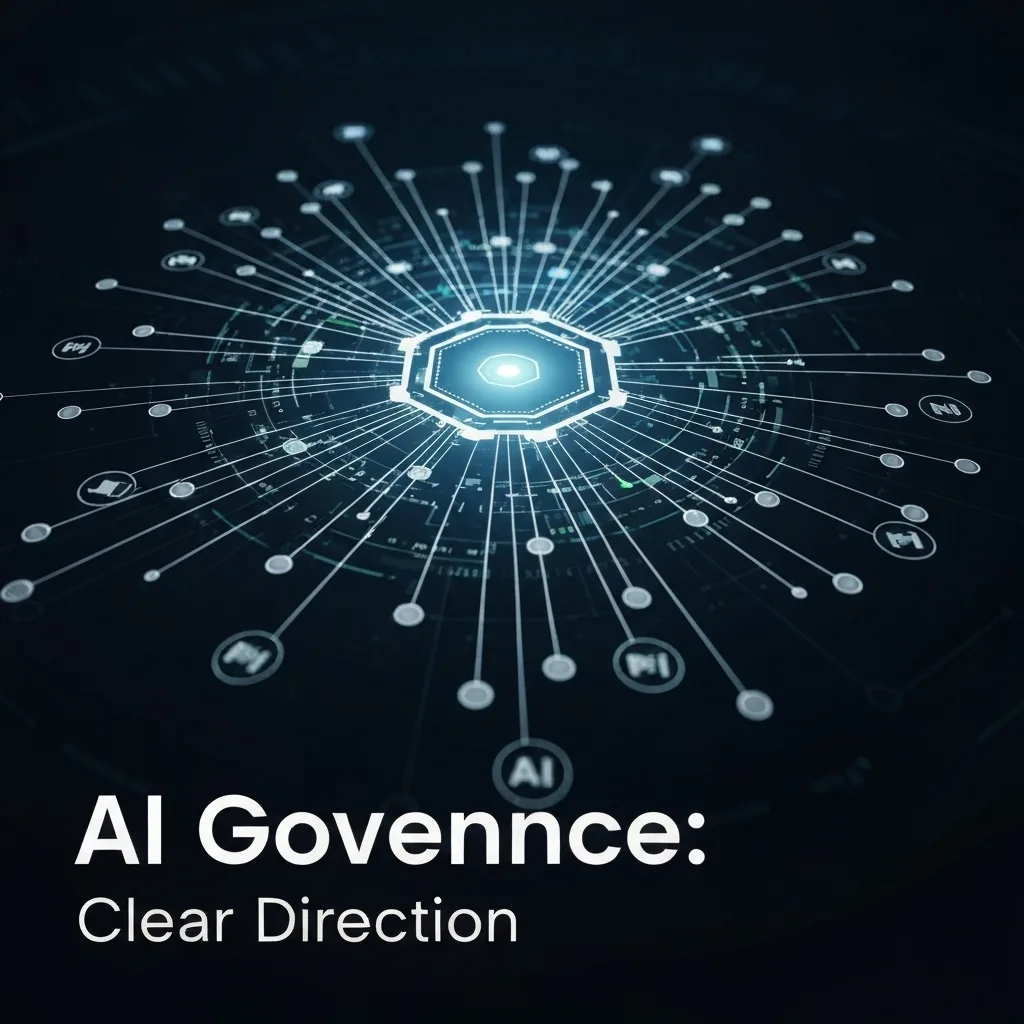
As organizations race to integrate AI, a critical question emerges: who is actually in charge? The answer lies in a well-structured AI governance committee, a dedicated body designed to oversee the entire AI lifecycle. This isn't just about corporate governance; it's a specialized function focused on mitigating unique AI risks. The committee's primary mandate is to establish clear roles and responsibilities, ensuring that from data acquisition to model deployment, every step is managed, audited, and aligned with ethical and business standards. Without this clarity, accountability dissolves, and the risk of non-compliance, bias, and model failure skyrockets.
The Modern AI Governance Committee Structure
The structure of an effective committee is not monolithic; it's a cross-functional team of designated leaders. Key roles in AI governance include strategic, technical, and ethical oversight. At the top, leadership roles set the vision, while specialized owners and stewards manage the day-to-day realities of AI systems.
AI Data Steward: The Guardian of Quality
While the AI Data Owner sets the strategy, the AI data steward is the hands-on guardian of data quality. So, who is responsible for data quality in AI? It's the data steward. Their role is tactical and deeply technical, focusing on the implementation of data quality rules, metadata management, and ensuring data is fit for purpose before it ever reaches an AI model.
The difference between a data steward and a data owner in AI is one of accountability versus responsibility. The owner is accountable for the data asset's overall business value and risk, while the steward is responsible for the day-to-day management and quality control. One cannot function effectively without the other; they are two sides of the same data governance coin.
AI Governance: Beyond the Buzzwords
Effective AI governance is a comprehensive system of rules, practices, and processes. It integrates with broader governance, risk, and compliance (GRC) strategies but has its own unique requirements. An effective ai governance framework provides the blueprint, while ai governance tools provide the means for automation and enforcement. For professionals looking to lead in this space, an ai governance certification can validate the specialized skills required to manage these complex systems.
Building the Foundation: The AI Governance Framework
An ai governance framework is the constitution for your AI initiatives. It's a structured set of guidelines, policies, and best practices that dictates how AI is developed, deployed, and managed. This isn't a theoretical exercise; it's a practical blueprint for safe and effective AI. Leading organizations often adapt established models from the National Institute of Standards and Technology (NIST), such as the primary NIST AI Risk Management Framework (AI RMF 1.0). This framework, which provides a voluntary structure for managing AI risks, is complemented by specific guidance like the NIST AI 600-1 Generative AI Profile to promote trustworthy AI systems. A robust framework ensures that governance is not an afterthought but a foundational pillar of the entire AI strategy.
Implementing Your Framework: From Policy to Practice
AI governance implementation is where the framework becomes reality. This process involves translating high-level principles into actionable policies and procedures. A key starting point is creating an ai governance policy template that can be adapted for various departments and use cases. This often includes a specific ai acceptable use policy that clearly defines for employees what is and is not permissible when using company-approved AI tools, especially powerful generative AI systems. True implementation goes beyond documents; it involves integrating these rules into the technology stack itself, a process critical for governing the entire AI automation ecosystem.
AI Systems in Context: From Assistants to Agents
Governance must adapt to the type of AI it oversees. The rules for a simple AI assistant that automates scheduling are vastly different from those for autonomous AI agents that can execute complex multi-step tasks. Conversational AI used in customer service, for example, requires strict oversight on data privacy and bias in responses. As these systems become more sophisticated, the governance framework must evolve to manage the expanding scope of potential risks and interactions, ensuring that every AI application, regardless of its complexity, operates safely and ethically.
Navigating the AI Regulatory Maze
The landscape of AI laws and AI regulations is rapidly evolving, creating a complex compliance challenge for global organizations. There is no single, universal set of AI rules and regulations; instead, companies must navigate a patchwork of jurisdictional requirements. From the EU to the US, governments are establishing artificial intelligence laws and regulations to address issues like data privacy, algorithmic transparency, and accountability. Staying ahead of these global AI regulations is no longer optional—it's a core component of risk management and a prerequisite for market access.
Key AI Compliance Standards to Watch
Several landmark regulations are shaping the future of AI compliance. EU AI Act compliance is a major focus for any company operating in Europe, as it categorizes AI systems by risk and imposes strict requirements on high-risk applications. In the United States, the NIST AI Risk Management Framework provides a voluntary but highly influential guide for building trustworthy AI. Specific regulations like NYC Local Law 144, which governs the use of AI in hiring, and federal principles outlined in the "Blueprint for an AI Bill of Rights" from the White House Office of Science and Technology Policy (OSTP)—a set of guiding principles rather than a legally binding law—signal a clear trend toward greater regulatory scrutiny. Achieving compliance requires a proactive and adaptive governance strategy.
Ensuring Trust: Data Quality and Bias Mitigation
The adage "garbage in, garbage out" has never been more relevant than in the age of AI. According to sources like DQLabs, poor data quality in AI is a primary driver of model failure, inaccurate predictions, and discriminatory outcomes. Effective governance mandates rigorous processes for managing the entire data lifecycle, from initial data collection methods to final analysis. This requires empowering data science and data analyst teams with advanced data analysis tools to continuously monitor, clean, and validate datasets. Without a relentless focus on data quality, even the most sophisticated models are built on a foundation of sand.
The Critical Role of AI Bias Detection
Even with high-quality data, bias can creep into AI systems. AI bias detection is the systematic process of identifying and mitigating prejudices in algorithms and the data they are trained on. This is particularly critical in sensitive areas like hiring, where issues like AI resume screening bias can perpetuate systemic inequalities. An AI bias audit should be a standard procedure for any model that impacts people's lives. As LLM bias becomes a more recognized problem, organizations must implement tools and techniques to uncover and correct hidden biases in bias in LLM models, ensuring they operate fairly and ethically.
Frequently Asked Questions
What is the primary role of an AI Governance Committee?
An AI Governance Committee is a cross-functional body responsible for overseeing an organization's AI strategy and execution. Its primary role is to establish policies, define roles and responsibilities, manage AI-related risks, and ensure that all AI systems are developed and deployed in an ethical, compliant, and secure manner.
Is an AI Data Owner the same as an AI Data Steward?
No, they are distinct but related roles. An AI Data Owner is a senior-level, strategic role accountable for a specific data domain's business value, risk, and security. An AI Data Steward is a tactical, hands-on role responsible for the day-to-day management of data quality, metadata, and adherence to governance policies within that domain.
What is an AI governance framework?
An AI governance framework is a structured set of rules, principles, policies, and standards that guide the responsible development, deployment, and management of AI technologies. It provides a blueprint for decision-making, ensuring that AI initiatives align with business objectives, ethical principles, and regulatory requirements. Popular examples include the NIST AI Risk Management Framework.
How do you detect bias in an AI model?
AI bias detection is the process of identifying and measuring biases in AI models and the datasets they are trained on. This is done through various methods, including statistical analysis, fairness audits, and using specialized tools to uncover how a model's predictions may disproportionately affect different demographic groups. The goal is to mitigate these biases to ensure fair and equitable outcomes.