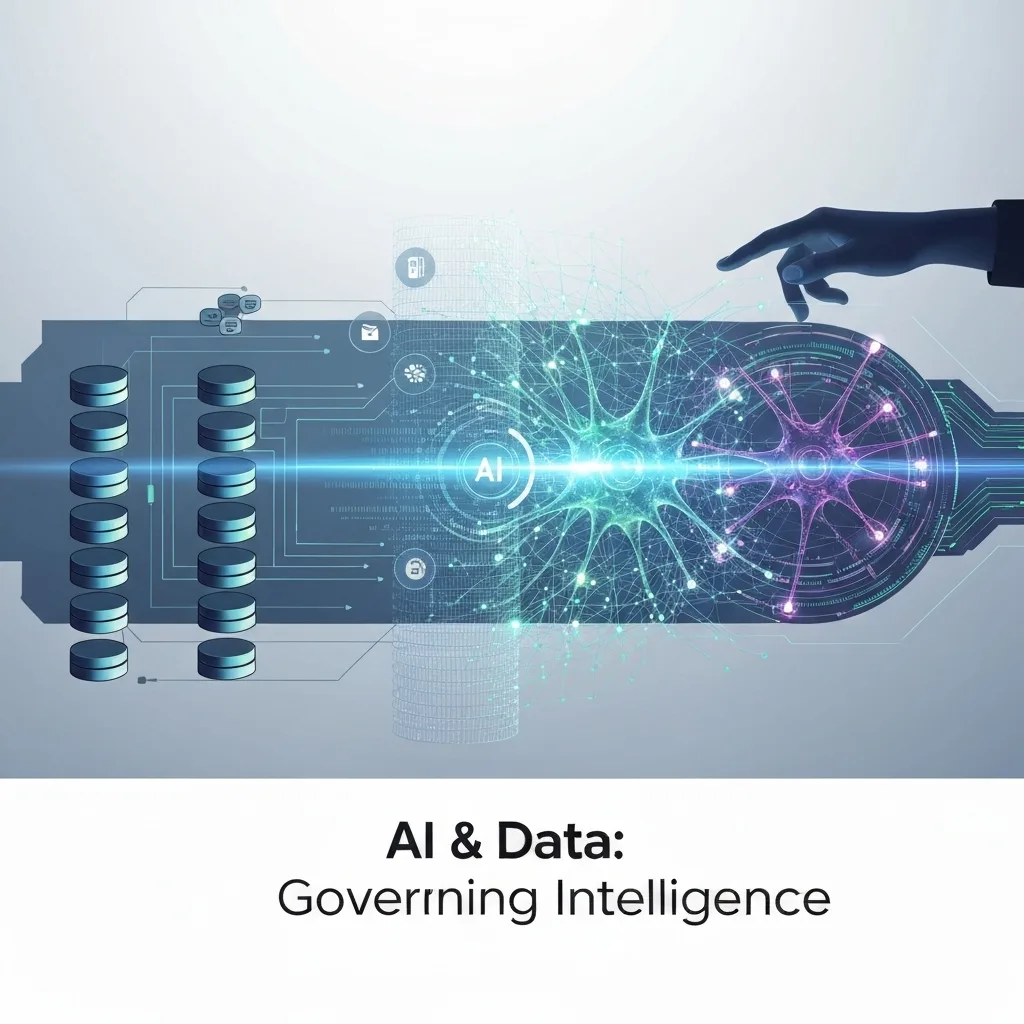
As a new AI Automation Engineer, you're stepping into a world where data is everything. You might be comfortable with traditional data governance—the principles of keeping data clean, secure, and organized. But when you introduce artificial intelligence, the rules change dramatically. Suddenly, it's not just about the data itself, but about what the AI does with it. This is the complex, fast-moving world of AI governance, and the gap between the two concepts can feel vast. Competitors will define the terms, but they won't show you how to bridge that gap. This guide is different. It's an actionable roadmap designed specifically for engineers like you. We'll move beyond definitions to provide the practical steps, frameworks, and tools you need to build a unified, agile governance strategy that tackles the toughest challenges in ethics, compliance, and continuous monitoring from a hands-on perspective.
Foundational Understanding: Defining the Core Concepts
To build a robust governance strategy, you first need to understand the fundamental shift from traditional data practices to the dynamic demands of artificial intelligence. While they share a common ancestry in data management, their goals, scope, and methods are worlds apart.
What is AI Governance?
AI governance is the active, ongoing framework of rules, practices, and tools used to ensure that artificial intelligence systems are developed and operated in a manner that is safe, ethical, fair, and compliant with legal standards. Unlike a static checklist, it's a dynamic system for managing the entire AI lifecycle—from data ingestion and model training to deployment and monitoring. The core goal of AI governance is to maximize the benefits of AI while proactively mitigating its inherent risks, such as algorithmic bias and a lack of transparency. It answers the question: "How do we ensure our AI acts in alignment with human values and legal requirements?"
At its heart is the concept of ethical AI, which is the practice of designing and deploying AI systems that adhere to well-defined ethical principles like fairness, accountability, and transparency. An ethical AI definition goes beyond mere functionality; it demands that systems are built to avoid causing harm and to promote positive outcomes for all users. As thought leaders from organizations like the AI Now Institute emphasize, this requires a proactive commitment to fairness, not just a reactive checklist.
AI vs. Traditional Data Governance: The Key Differences
The primary distinction between AI data governance vs traditional data governance lies in their focus. Traditional data governance is concerned with the state of data—its quality, security, storage, and accessibility. It's about maintaining a clean, reliable source of truth. AI governance, however, is concerned with the behavior of systems that use that data. It governs the actions, predictions, and decisions made by algorithms.
While distinct, the two are deeply connected. Robust data governance for AI is the foundation upon which effective AI governance is built. You cannot have a fair AI model if it's trained on poorly governed, biased data.
Understanding AI Bias: The Ethical Imperative
What is AI bias? AI bias occurs when an algorithm produces systematically prejudiced results due to erroneous assumptions in the machine learning process. This isn't a malicious act by the AI; it's a reflection of the flaws and biases present in the data it was trained on or the biases of the people who designed it. For example, if a hiring algorithm is trained on historical data from a company that predominantly hired men for technical roles, it may learn to unfairly favor male candidates, creating a biased system.
Understanding what is bias in artificial intelligence is critical because it can lead to real-world harm, from discriminatory loan applications to flawed medical diagnoses. This is why a core component of any AI governance framework is dedicated to identifying, measuring, and mitigating these biases.
Building Your Unified Framework: An Actionable Roadmap
For a young engineer, the theory is only useful if it can be put into practice. Here is a clear, step-by-step roadmap to building an integrated governance framework that is both agile and effective.
Step 1: Adopting an AI Governance Framework (Like NIST)
You don't need to reinvent the wheel. Start with an established AI governance framework. Palo Alto Networks, referencing the NIST AI Risk Management Framework (AI RMF), describes its core functions as Govern, Map, Measure, and Manage, with Map, Measure, and Manage focusing on identifying and addressing AI risks throughout the AI system's lifecycle.
As an engineer, your practical application of the NIST AI framework involves:
1. Map: Identify the context of your AI system. What is it for? Who will it impact? What are the potential harms (e.g., bias, safety failures)?
2. Measure: Analyze and track the identified risks. This is where you'll use tools to conduct bias audits, test for model accuracy, and evaluate its transparency.
3. Manage: Based on your measurements, implement strategies to mitigate risks. This could involve retraining a model on more diverse data, implementing human oversight, or deciding a high-risk AI system is not ready for deployment.
Using a playbook like the NIST AI RMF playbook provides a defensible, documented process for making responsible decisions.
Step 2: Selecting the Right AI Governance Tools
A framework is your blueprint; tools are what you use to build. The market for AI governance platforms is rapidly expanding. These tools automate the process of monitoring, explaining, and auditing your models.
Key categories of AI governance tools to look for include:
* Model Observability Platforms: These tools provide real-time monitoring for things like data drift, model degradation, and performance anomalies.
* Bias Detection & Mitigation Tools: Software designed specifically to run AI bias audit checks on your datasets and models, helping you identify and mitigate bias in AI.
* Explainability (XAI) Tools: These help you understand why a model made a specific decision, which is crucial for building transparent artificial intelligence.
* Model Registries & Catalogs: Centralized systems for tracking all the AI models in your organization, their versions, and their associated risks.
As you build out your systems, integrating these AI governance solutions is essential for creating a scalable and auditable process. For a deeper dive into how these components fit together, exploring the concepts behind a Holistic AI automation ecosystem governance can provide valuable context.
Navigating Risk, Compliance, and Ethics in Practice
With a framework and tools in place, the final step is applying them to the complex world of real-world regulations and ethical challenges.
The Modern Regulatory Landscape: From the EU AI Act to Local Laws
AI regulations are no longer theoretical. Governments worldwide are implementing strict AI laws with significant penalties. Key regulations to be aware of include:
As an engineer, your role is to ensure the systems you build have the technical foundations for AI compliance, such as logging capabilities for audits and explainability features.
Step 3: Implementing AI Bias Mitigation Strategies
It's not enough to detect bias; you must actively mitigate it. AI bias mitigation strategies are practical techniques you can implement during the AI lifecycle:
The goal is to create an auditable AI system where you can demonstrate the steps taken to reduce bias in machine learning.
Step 4: Ensuring Transparency and Continuous Monitoring
Governance is not a one-time setup. It's a continuous process. Your framework must include ongoing monitoring to ensure AI accuracy and fairness over time. This is where the concept of transparent AI becomes critical. You need to be able to explain how your models work, especially when they are used in high-stakes decisions.
This involves:
* Model Documentation: Keep detailed records of the data, assumptions, and performance metrics for every model version.
* Regular Audits: Schedule periodic AI bias audit checks to catch biases that may emerge as data patterns change.
* Feedback Loops: Create mechanisms for users to report and appeal decisions made by AI systems.
---
About the Author
Hussam Muhammad Kazim is an AI Automation Engineer with a focus on building and implementing responsible AI systems. With his experience in the field, he is dedicated to exploring the practical challenges and solutions in AI governance and ethics.
Frequently Asked Questions
What is the main difference between AI and traditional data governance?
The main difference is their focus. Traditional data governance manages data as a static asset, focusing on its quality, security, and storage. AI governance manages the dynamic behavior of AI models that use that data, focusing on ensuring they are fair, ethical, transparent, and compliant.
What is an example of AI bias?
A classic example of AI bias is a resume-screening tool that is trained on historical hiring data from a company that has historically favored male candidates for engineering roles. The AI may learn this pattern and systematically rank female candidates lower, even if they are equally qualified, because it associates male- Pronomina with success in that role based on the biased data.
Why is an AI governance framework important?
An AI governance framework, like the NIST AI RMF, is crucial because it provides a structured, repeatable process for managing the complex risks associated with AI. It moves an organization from an ad-hoc approach to a systematic one, ensuring that AI systems are developed and deployed responsibly, ethically, and in compliance with regulations. It provides a defensible standard for decision-making.
What are the penalties for non-compliance with the EU AI Act?
The penalties for non-compliance with the EU AI Act are severe and depend on the level of infringement. For the most serious violations, such as using prohibited AI systems, fines can be up to €35 million or 7% of the company's total worldwide annual turnover for the preceding financial year, whichever is higher.